"Dream, Dream, Dream! Conduct these dreams into thoughts, and then transform them into action."
- Dr. A. P. J. Abdul Kalam
"Dream, Dream, Dream! Conduct these dreams into thoughts, and then transform them into action."
- Dr. A. P. J. Abdul Kalam
18 Dec 2025
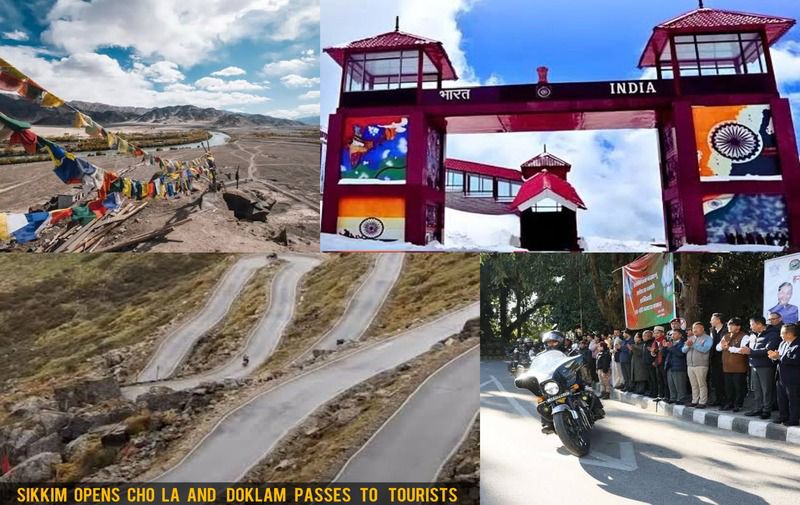
In a landmark initiative, the State of Sikkim on Monday opened two of its most sensitive and historically significant border areas, Doklam and Cho La, to tourists under regulated conditions. This move is part of India’s broader vision to connect citizens with the nation’s border history while simultaneously fostering economic development in remote villages. The announcement signifies a new chapter in the promotion of “battlefield tourism,” allowing citizens to experience sites that have witnessed moments of extraordinary valor and sacrifice by the Indian armed forces. The initiative, part of the Bharat Ranbhoomi Darshan program, reflects the Government’s commitment to linking tourism with historical and strategic significance.
Doklam gained international attention in 2017 during a tense standoff between Indian and Chinese troops, highlighting its strategic importance. Cho La, on the other hand, is a site where Indian and Chinese forces clashed during the 1967 border conflict. Both locations, situated in challenging terrains, carry deep historical and military significance. The opening of these passes allows tourists and bikers to witness these historic sites firsthand, under carefully regulated guidelines designed to ensure both safety and preservation. By providing controlled access to these areas, the initiative also seeks to instill a sense of patriotism and respect for the sacrifices of soldiers among visitors.
Chief Minister Prem Singh Tamang emphasized the collaborative effort that made this initiative possible. Expressing gratitude to Prime Minister Narendra Modi and the central government, he highlighted that the opening of Doklam and Cho La is the result of coordinated planning between the Indian Army, state authorities, and central agencies. The Chief Minister stressed that increased tourist movement will create economic opportunities for local communities. By opening strategically important passes for regulated tourism, the Vibrant Village Program aims to strengthen border area economies. Remote villages near Doklam and Cho La stand to benefit from improved infrastructure, increased footfall, and the growth of ancillary services such as hospitality and guided tours. Infrastructure development is already underway, with projects like dedicated parking at Changu, one of Sikkim’s most frequented tourist destinations, to address long-standing space constraints. Basic facilities have been put in place to ensure smooth tourist experiences while maintaining the region’s ecological and strategic integrity.
Bharat Ranbhoomi Darshan, a joint initiative of the Indian Army and the Ministry of Tourism, aims to allow citizens to visit historic war zones and military sites. This program seeks to bring alive India’s military history, honor the sacrifices of its soldiers, and build public awareness of strategic areas that have shaped the nation’s defence narrative. According to the Ministry of Tourism, historic battlefields often lie in remote terrains that are difficult to access. Through collaboration with the Army Adventure Wing, strategies were developed to make these sites accessible while highlighting their historical and military importance. The program is envisioned to educate visitors about the bravery, discipline, and commitment of Indian soldiers, fostering a deeper connection between citizens and their armed forces.
On Monday, Chief Minister Tamang flagged off 25 motorbikes and vehicles to mark the ceremonial opening of the two passes. The initiative emphasizes regulated access to sensitive areas to ensure the safety of tourists and the protection of strategic locations. While basic facilities are in place, Tamang highlighted that the project is ongoing. The State Government remains committed to improving infrastructure and services, making the border regions more accessible while maintaining security and ecological balance. This careful planning underscores the government’s intent to combine tourism with strategic development. By bridging history, tourism, and development, this initiative strengthens the bond between citizens and the armed forces, creating a shared sense of pride and responsibility toward the nation’s border regions.
Chief Minister Tamang expressed confidence that battlefield tourism would expand awareness about India’s military history while fostering local development. The State Government, in coordination with the Army and central authorities, will continue to enhance facilities, ensuring that the initiative grows sustainably. As Sikkim takes this historic step, it sets a precedent for other border states, particularly in the Northeast, to open strategically significant sites for tourism. By combining patriotism, education, and livelihood generation, the Cho La and Doklam initiative exemplifies how India is blending history, strategy, and development for the benefit of its people.

Writing about what truly matters, good news and stories to remind the world - it is brighter than we think.