"Dream, Dream, Dream! Conduct these dreams into thoughts, and then transform them into action."
- Dr. A. P. J. Abdul Kalam
"Dream, Dream, Dream! Conduct these dreams into thoughts, and then transform them into action."
- Dr. A. P. J. Abdul Kalam
23 Jan 2026
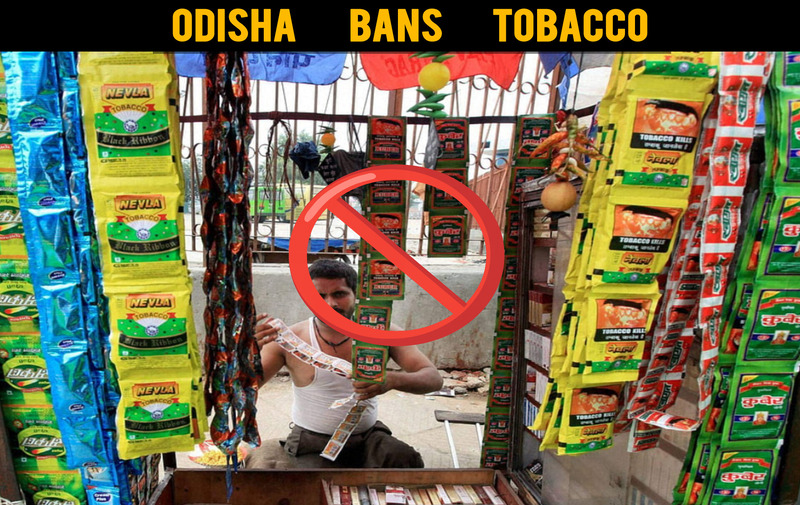
In a bold and much-needed move, Odisha has taken a decisive step toward safeguarding public health by announcing a complete ban on tobacco and nicotine in food products. Notified by the state’s Health Department on January 21, 2026, the order prohibits the manufacture, storage, sale, and distribution of any food item containing tobacco or nicotine. This includes widely consumed products such as paan masala, gutkha, zarda, and khaini, whether sold in packaged form or loose, flavoured or unflavoured.
By shutting down long-standing loopholes that existed after the 2013 gutkha ban, the state has sent a clear message: public health will no longer be compromised for convenience or commerce. The decision aligns with national food safety regulations and reinforces the principle that substances harmful to human health have no place in everyday consumables.
The urgency of this ban becomes evident when viewed against Odisha’s alarming tobacco consumption patterns. According to national health surveys, over 42 percent of adults in the state use smokeless tobacco, nearly double the national average. This widespread usage has contributed to a growing burden of oral cancers, cardiovascular diseases, and long-term addiction, particularly among young people and economically vulnerable communities. Smokeless tobacco products are often perceived as less harmful than cigarettes, a misconception that has enabled their deep social acceptance.
Odisha’s comprehensive ban directly challenges this narrative, reframing tobacco not as a cultural habit but as a preventable health risk. By intervening at the level of food safety, the state has chosen a preventive approach, one that prioritizes long-term well-being over reactive healthcare responses.
One of the most significant aspects of Odisha’s decision lies in its scope and clarity. Unlike earlier regulations that targeted only specific products or packaging formats, the new notification covers the entire supply chain, from manufacturing units to street-level vendors. This eliminates ambiguity and limits the scope for evasion, ensuring that enforcement agencies have a clear legal mandate. Importantly, the ban does not rely solely on moral persuasion but is rooted in established legal frameworks, including national food safety laws and directives from the Supreme Court.
While cigarettes and other smoking products continue to be governed under separate legislation, this move demonstrates how states can creatively and effectively use existing laws to address public health challenges. The success of this policy will depend on vigilant enforcement, but its design reflects careful planning and strong intent.
Public response to the ban has largely been positive, with health experts, civil society groups, and citizens welcoming Odisha’s proactive leadership. Many see this as a model that other states and potentially the nation can follow to curb the rising burden of tobacco-related diseases. Beyond regulation, the ban opens the door for broader conversations around awareness, addiction support, and behavioral change.
If paired with education campaigns and rehabilitation initiatives, the policy has the potential to transform lives, especially among the youth. Odisha’s action reminds us that governance, at its best, is not merely about control but about care. By choosing health over habit, the state has taken a hopeful step toward a future where public policy actively nurtures healthier, more informed communities.

Writing about what truly matters, good news and stories to remind the world - it is brighter than we think.