"Dream, Dream, Dream! Conduct these dreams into thoughts, and then transform them into action."
- Dr. A. P. J. Abdul Kalam
"Dream, Dream, Dream! Conduct these dreams into thoughts, and then transform them into action."
- Dr. A. P. J. Abdul Kalam
9 Oct 2026
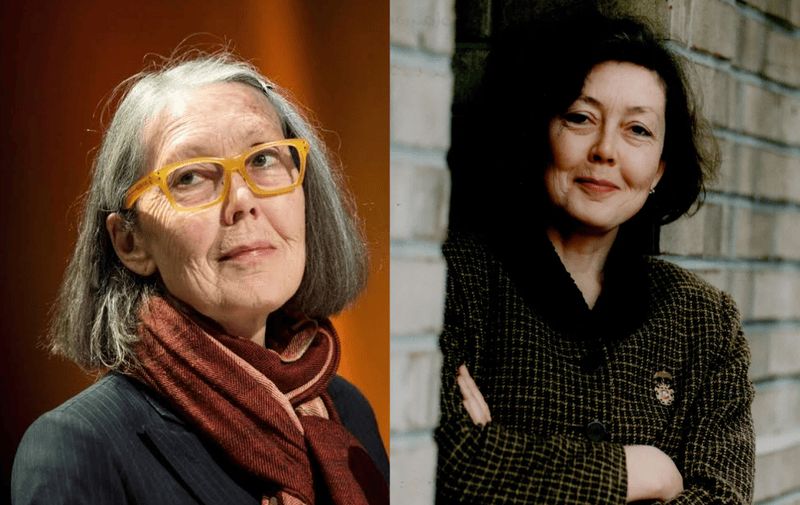
What happens when ancient Greek myths meet modern poetry? For Canadian writer Anne Carson, the result is a distinctive literary world where classical stories, human emotions and experimental writing come together.
Carson, 76, has won the 2026 Nobel Prize in Literature for her bold and inventive body of work. Announcing the award on Thursday, the Swedish Academy recognised her ability to draw on classical traditions while creating fresh forms of contemporary literature.
The prize carries 12 million Swedish kronor, worth approximately $1.2 million, adding one of the world's highest literary honours to Carson's remarkable career.
Unlike writers who fit neatly into a single category, Carson moves effortlessly between poetry, essays, translations, literary criticism and performance. Her work challenges conventional boundaries and invites readers to look at familiar stories in unfamiliar ways.
Born on June 21, 1950, in Toronto, Canada, Carson discovered her fascination with ancient languages during her school years. A Latin teacher introduced her to ancient Greek, setting her on a path that would shape her literary career.
She studied at the University of Toronto's St. Michael's College, eventually earning her bachelor's degree in 1974, master's degree in 1975 and PhD in 1981. She also studied Greek metrics at the University of St. Andrews in Scotland.
Her academic background became central to her writing. Rather than treating scholarship and creativity as separate pursuits, Carson brought the language, mythology and ideas of ancient Greece into modern literary forms.
Over the years, she taught at several prestigious institutions, including Princeton University, Emory University, the University of Michigan and the University of California, Berkeley. She also served as director of graduate studies in classics at McGill University.
Carson currently lives in Iceland and has held Icelandic citizenship since 2022, according to reports.
The Swedish Academy recognised Carson for the unusual way she connects classical literature with experimental contemporary writing.
Her work often explores the meeting point between the precise study of words and the creative search for meaning. Greek myths and ancient texts become starting points for examining relationships, desire, loss and the complexities of human life. This approach has made her one of the most distinctive voices in contemporary literature.
Autobiography of Red (1998)
One of Carson's best-known works, this verse novel reimagines the Greek myth of Geryon and Herakles in a modern setting. Despite its title, it is not a conventional autobiography.
Other notable works include Eros the Bittersweet, Glass, Irony and God, Men in the Off Hours, The Beauty of the Husband, Float and Wrong Norma among others. Her book The Beauty of the Husband won the T. S. Eliot Prize for Poetry in 2001, while Wrong Norma received the National Book Critics Circle Award.
Before the Nobel, Carson had already earned several major awards and fellowships, including the Lannan Literary Award, Griffin Poetry Prize, Guggenheim Fellowship and MacArthur Fellowship.
Her Nobel win celebrates a writer who has spent decades demonstrating that ancient ideas can still speak powerfully to modern readers. By bringing classical scholarship into unexpected literary forms, Carson continues to expand the possibilities of poetry and storytelling.
.jpeg)
I have a Masters in Literature and a knack for spotting the silver lining! When I’m not chasing good news, you’ll find me nurturing my farm or lost in a good book.