"Dream, Dream, Dream! Conduct these dreams into thoughts, and then transform them into action."
- Dr. A. P. J. Abdul Kalam
"Dream, Dream, Dream! Conduct these dreams into thoughts, and then transform them into action."
- Dr. A. P. J. Abdul Kalam
2 Mar 2026
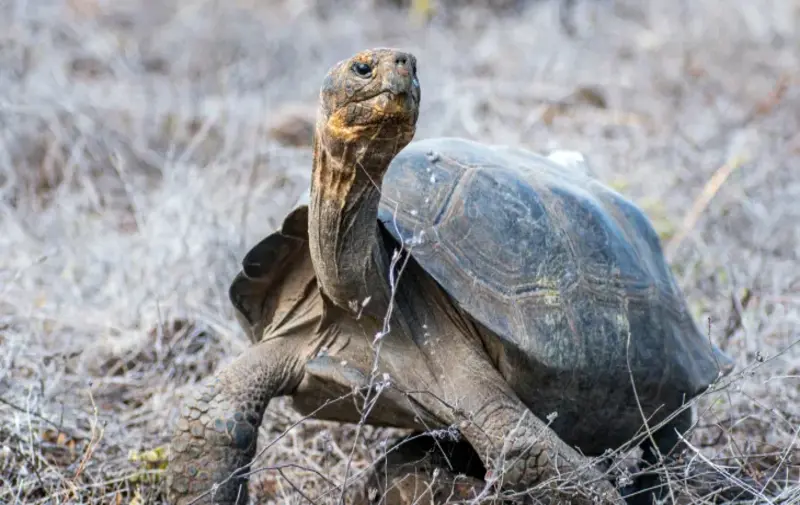
On a windswept morning in the Pacific, something extraordinary happened on the island of Floreana. Slow, steady, and silent, 158 young giant tortoises began their journey across the volcanic soil—a journey their ancestors were forced to end nearly 200 years ago. This was not just a wildlife release. It was history correcting itself. For the first time since the 1840s, giant tortoises are once again roaming Floreana in the Galápagos Islands. Conservationists have described the moment as a “hugely significant milestone,” and rightly so. These tortoises belong to the extinct subspecies Chelonoidis niger niger, whose disappearance was once considered permanent. Today, their return stands as one of the most ambitious ecological restoration efforts ever attempted.
Located about 1,000 kilometers west of Ecuador in the Pacific Ocean, the Galápagos Islands are globally known as a “living laboratory of evolution.” It was here that Charles Darwin developed ideas that would later shape the theory of evolution. The volcanic archipelago is home to extraordinary species found nowhere else on Earth, from marine iguanas to blue-footed boobies and, of course, the iconic giant tortoises. Floreana, one of the inhabited islands in the archipelago, once supported its own distinct tortoise species. These slow-moving reptiles were not just animals; they were ecological engineers. By grazing on vegetation, dispersing seeds through their droppings, and trampling dense undergrowth, they shaped entire landscapes. Their presence influenced plant growth patterns and helped maintain ecological balance. But human arrival changed everything.
Sailors and whalers crossing the Pacific discovered that giant tortoises could survive for months without food or water. Thousands were taken aboard ships as a fresh meat supply during long voyages. The tortoises of Floreana were hunted relentlessly. By the 1840s, Chelonoidis niger niger was declared extinct. The damage did not stop there. Settlers introduced invasive species such as goats, pigs, dogs, cats, donkeys, and rodents. These animals destroyed vegetation, trampled habitats, and fed on tortoise eggs and hatchlings. Floreana’s ecosystem slowly deteriorated without its keystone species. What was once a thriving, balanced environment became fragmented and degraded. For decades, extinction seemed irreversible.
Hope arrived in 2008 in the most unexpected place: the slopes of Wolf Volcano on Isabela Island. Scientists discovered tortoises carrying genetic ancestry of the extinct Floreana species. Though the original pure population was gone, fragments of its DNA had survived in hybrid tortoises. This discovery changed everything. In 2017, a “back-breeding” program began under the leadership of the Galápagos National Park Directorate. Researchers carefully selected 23 hybrid tortoises with the closest genetic links to the extinct subspecies. These tortoises were transferred to a breeding center on Santa Cruz Island, where conservationists began a long and patient process of selective breeding. The goal was clear: revive as much of the original Floreana genetic identity as possible. By 2025, more than 600 hatchlings had been produced. Several hundred grew large and strong enough to survive in the wild. And this week, 158 of them were finally released onto Floreana.
Giant tortoises are often described as “ecosystem engineers.” This term is not poetic exaggeration. Their daily movements—grazing, digging, seed dispersal—physically transform the landscape. Seeds pass through their digestive systems and germinate far from parent plants. Open areas are maintained through their grazing habits, allowing diverse plant species to thrive. Without them, ecosystems can become unbalanced. Certain plants may dominate, while others disappear. Soil composition changes. Animal interactions shift. By returning these tortoises to Floreana, conservationists are not just bringing back a species; they are restoring ecological processes. It is a reminder that wildlife conservation is not only about protecting individual animals. It is about rebuilding relationships within nature.
Island ecosystems are among the most fragile on Earth. Many have suffered similar fates due to invasive species and overexploitation. The success of the Floreana project demonstrates that even long-lost species can be partially revived through science, patience, and collaboration. While the restored tortoises are not genetically identical to their extinct ancestors, they carry enough of the original lineage to fulfill the same ecological role. In conservation terms, that is a powerful victory. As these young tortoises slowly explore their reclaimed home, they represent more than survival. They represent resilience. Nearly 200 years ago, human exploitation silenced the heavy footsteps of Floreana’s giant tortoises. Today, those footsteps return steady, determined, and full of promise. And in their quiet movement across volcanic soil, they remind the world that extinction, though tragic, does not always have to be the final chapter.

Romanticizing life and shaping stories from everything I see through my journalistic lens. Also, I love sports on the side.