"Dream, Dream, Dream! Conduct these dreams into thoughts, and then transform them into action."
- Dr. A. P. J. Abdul Kalam
"Dream, Dream, Dream! Conduct these dreams into thoughts, and then transform them into action."
- Dr. A. P. J. Abdul Kalam
7 May 2026
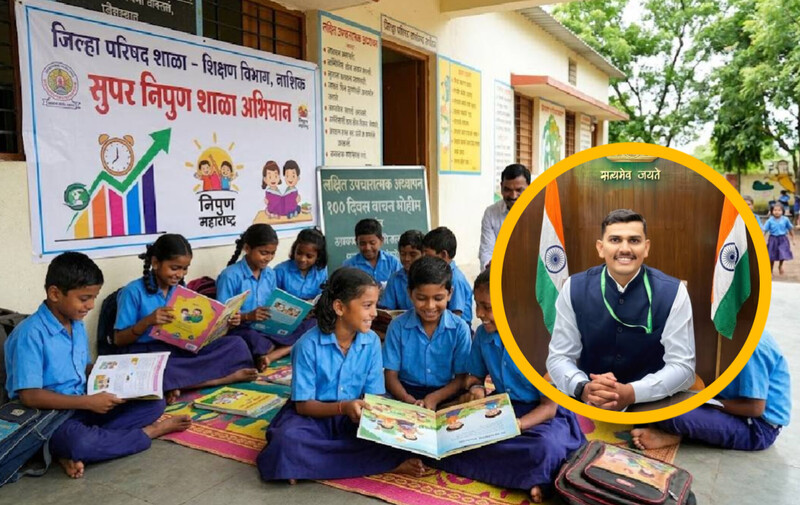
In the classrooms of Nashik, something quietly powerful has been unfolding. Chalkboards are no longer just filled with lessons—they are becoming symbols of change. Students who once struggled to read a simple paragraph are now confidently engaging with stories, numbers, and ideas. This transformation is not accidental. It is the result of a focused mission, strong leadership, and a belief that every child can learn. Under the ambitious Mission NIPUN Maharashtra, Nashik district has emerged as a standout example of what can happen when systems work with purpose and precision.
At the heart of this success is Omkar Pawar, CEO of Zilla Parishad Nashik, whose approach combined data-driven decision-making with a deeply human understanding of education. Rather than relying on broad, generic reforms, the focus was clear: identify the children who were falling behind and help them catch up. Between February and March, the results were nothing short of remarkable.
The number of Super NIPUN Schools surged from 233 to 1,113, while NIPUN Schools increased from 353 to 1,471. Even more significantly, nearly 56,000 additional students achieved NIPUN status, pushing the total to 139,701. These are not just numbers; they represent children gaining confidence, teachers rediscovering purpose, and classrooms coming alive.
The turning point came with a simple yet powerful realization: progress begins by acknowledging gaps. Instead of focusing only on overall performance, the district zeroed in on non-NIPUN students, those who had not yet achieved basic learning competencies. Special workshops were designed for these students, offering daily, structured support.
For one hour each in language and mathematics, children received focused attention tailored to their needs. This consistent effort helped bridge foundational gaps, ensuring that no child was left behind.
In many ways, this approach shifted the narrative from “teaching the class” to “teaching the child,” making education more inclusive and effective.
One of the most innovative aspects of the initiative was its strong emphasis on reading. Through the “100 Days Reading Campaign,” students were exposed to daily digital stories shared via official WhatsApp channels. What may seem like a small step turned into a powerful habit-building exercise.
For many children, especially in rural areas, access to engaging reading material is limited. By bringing stories directly to them, the campaign sparked curiosity and imagination. Reading became less of a task and more of an experience. Teachers reported noticeable changes. Students began participating more actively in class, expressing themselves better, and showing improved comprehension skills. The simple act of reading, repeated every day, began to reshape learning outcomes.
Behind every successful initiative lies a system that ensures it stays on track. In Nashik, regular review meetings at the Zilla Parishad level played a crucial role. Officials, including Block Education Officers and other key stakeholders, came together to assess progress, identify challenges, and refine strategies. This culture of accountability ensured that the mission was not just implemented but actively monitored. Problems were addressed quickly, and best practices were shared across schools.
At the same time, direct engagement added a human touch. Daily virtual interactions with schools in the most challenging areas allowed leaders to connect with teachers and students, understand ground realities, and provide encouragement. These conversations built trust and motivation, reinforcing the idea that every effort mattered.
Nashik’s progress offers valuable lessons for other districts and states. It shows that improving education does not always require complex solutions. Sometimes, it is about clarity of purpose, consistent effort, and a willingness to adapt. The four-layered strategy of focused remediation, reading promotion, rigorous monitoring, and direct engagement created a balanced approach that addressed both academic and emotional aspects of learning. It ensured that progress was not just measured but sustained. As classrooms across Nashik continue to evolve, the impact of Mission NIPUN Maharashtra is becoming increasingly visible. The district’s journey is a reminder that education is not just about achieving targets it is about building foundations that last a lifetime. And in the voices of thousands of children now reading, learning, and dreaming with confidence, the success of this mission finds its most powerful expression.

Writing about what truly matters, good news and stories to remind the world - it is brighter than we think.