"Dream, Dream, Dream! Conduct these dreams into thoughts, and then transform them into action."
- Dr. A. P. J. Abdul Kalam
"Dream, Dream, Dream! Conduct these dreams into thoughts, and then transform them into action."
- Dr. A. P. J. Abdul Kalam
15 Apr 2026
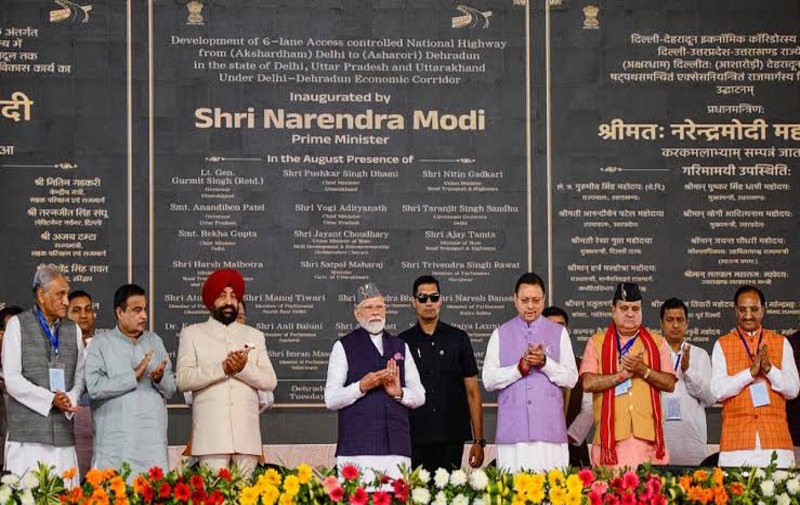
Under a bright sky in Dehradun, amid applause and anticipation, Prime Minister Narendra Modi dedicated the 210-kilometre-long Delhi–Dehradun Economic Corridor to the nation. But this was not just the opening of a highway—it was the unveiling of a vision where development meets nature, and progress walks hand in hand with culture. At the Jaswant Singh Army Ground in Garhi Cantt, the atmosphere reflected both pride and hope. Earlier in the day, the Prime Minister had travelled through a 12-kilometre roadshow, greeting people who lined the streets with excitement. His visit to the revered Datkali Temple added a spiritual touch, reminding everyone that in Devbhoomi Uttarakhand, every journey begins with blessings.
For decades, the journey from Delhi to Dehradun has been long, tiring, and unpredictable. Families travelling for vacations, pilgrims heading for the Char Dham, and students returning home all shared the same struggle: time lost on the road. This new economic corridor promises to change that reality. Travel time will be significantly reduced, making the hills feel closer than ever before. For a small business owner in Dehradun, it means faster delivery of goods. For a tourist, it means more time to enjoy the beauty of the mountains. For a pilgrim preparing for the sacred Char Dham Yatra, it means a smoother and safer journey. This is where infrastructure becomes more than concrete and asphalt—it becomes a bridge between people and possibilities.
Marking the occasion, the Prime Minister extended greetings on festivals like Baisakhi and Bihu, symbolizing India’s cultural diversity. These celebrations, rooted in agriculture and tradition, stood as a reminder that development must never forget its cultural roots. As Uttarakhand steps into its 26th year of formation, the corridor stands as a milestone in its journey.
The idea that “the third decade of the 21st century belongs to Uttarakhand” is gradually becoming a reality. With improved connectivity, the state is poised to grow not only as a tourist hub but also as an economic and cultural centre.
Respecting Nature While Building the Future
What makes this corridor truly unique is its approach to environmental sustainability. In a state known for its fragile ecosystem and rich biodiversity, development often raises concerns. However, this project attempts to strike a balance. A 12-kilometre-long elevated wildlife corridor has been constructed to ensure that animals can move freely without human interference. This is not just an engineering achievement—it is a statement that progress does not have to come at the cost of nature. Uttarakhand’s push for year-round tourism, including winter tourism, also reflects a thoughtful approach to economic growth. By spreading tourist activity across seasons, the pressure on the environment can be reduced while ensuring steady income for local communities.
Infrastructure as the Lifeline of a Nation
Calling infrastructure the “lifeline” of the country, the Prime Minister highlighted how investments have grown over the past decade. From less than ₹2 lakh crore before 2014 to over ₹12 lakh crore today, the scale of development reflects a long-term vision. In Uttarakhand alone, projects worth over ₹2.5 lakh crore are underway. Roads, railways, ropeways, and waterways are not just modes of transport—they are channels of growth that connect remote regions to national progress. The Delhi–Dehradun Economic Corridor is a key piece of this larger puzzle, strengthening connectivity in northern India and boosting economic activity across states.
A Step Toward Inclusive Growth
During his address, the Prime Minister also paid tribute to B. R. Ambedkar, emphasizing the importance of social justice and constitutional values. He highlighted that true development lies in uplifting the poor, the deprived, and the marginalized. Infrastructure projects like this corridor play a crucial role in achieving that goal. By connecting rural and remote areas to urban centres, they open doors to education, healthcare, and employment opportunities. The mention of Uttarakhand’s implementation of the Uniform Civil Code further underscored the idea of a unified and progressive society, where equality and fairness guide governance.
The Road Ahead
As the ribbon is cut and vehicles begin to move, the Delhi–Dehradun Economic Corridor becomes more than just a route—it becomes a symbol of aspiration. It represents a future where distance is no longer a barrier, where growth is inclusive, and where development respects both people and the planet. For the people of Uttarakhand, it is a promise of better days. For travelers, it is a smoother journey. And for the nation, it is another step toward becoming a developed India. In the end, this road tells a simple yet powerful story: when vision meets action, even the longest distances can be shortened not just between cities, but between dreams and reality.

Writing about what truly matters, good news and stories to remind the world - it is brighter than we think.