"Dream, Dream, Dream! Conduct these dreams into thoughts, and then transform them into action."
- Dr. A. P. J. Abdul Kalam
"Dream, Dream, Dream! Conduct these dreams into thoughts, and then transform them into action."
- Dr. A. P. J. Abdul Kalam
26 Mar 2026
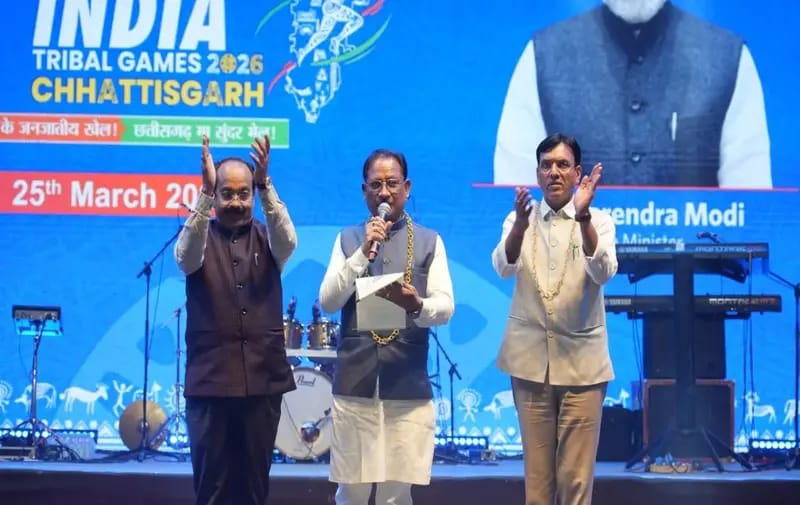
A new chapter in Indian sports history began on March 25, as the first-ever Khelo India Tribal Games officially got underway in Chhattisgarh. Now on its second day, March 26, the energy across venues is palpable, with athletes, officials, and spectators coming together to witness a truly inclusive sporting event. The Games, inaugurated by Union Sports Minister Mansukh Mandaviya in the presence of Chief Minister Vishnu Deo Sai, mark a historic step toward recognizing and nurturing talent from India’s tribal communities. This is not just another tournament; it is a movement aimed at giving voice, visibility, and validation to athletes who have long remained on the margins of mainstream sports.
India’s tribal regions have always been rich in natural athletic ability, often shaped by lifestyle, environment, and tradition. However, lack of exposure and infrastructure has prevented many talented individuals from reaching national and international platforms. The Khelo India Tribal Games seek to change that narrative. By bringing together over 3,000 athletes and officials from nearly 30 states and Union Territories, the event creates a national stage where talent meets opportunity. As Mansukh Mandaviya highlighted, the initiative aligns with the broader vision of building a “Viksit Bharat,” where sports play a key role in youth development and national pride. The Games are designed to identify talent early, support it systematically, and integrate it into India’s larger sporting ecosystem.
The Games are being hosted across three key cities in Chhattisgarh, Raipur, Jagdalpur, and Ambikapur, each playing a unique role in this grand event. Raipur serves as the central hub, hosting events such as football, hockey, archery, swimming, weightlifting, and kabaddi. In Jagdalpur, located in the Bastar region, athletics competitions are underway, drawing attention to raw speed and endurance from tribal athletes. Meanwhile, Ambikapur in Surguja is hosting wrestling and mallakhamb, blending strength, tradition, and skill. This multi-city format not only distributes the excitement but also brings infrastructure development and attention to different parts of the state.
One of the most unique aspects of the Khelo India Tribal Games is its deep connection to tribal identity and culture. The official mascot, “Morveer,” beautifully captures this spirit. Derived from the words “Mor,” meaning “ours,” and “Veer,” symbolizing courage, the mascot stands as a representation of pride, belonging, and strength. The unveiling of the logo, theme song, and mascot in Bilaspur last year set the tone for what the Games represent: not just competition, but celebration. It is a reminder that sports are not separate from culture; they are an extension of it.
The successful execution of such a large-scale event requires coordination and vision. The Khelo India Tribal Games are jointly managed by the Ministry of Youth Affairs and Sports, the Sports Authority of India, the Indian Olympic Association, and various national sports federations, along with the Chhattisgarh state organizing committee. Importantly, the competitions are being conducted with technical standards aligned with international benchmarks. This ensures that athletes not only compete but also gain exposure to professional-level conditions, preparing them for future global events. The Games are part of the larger Khelo India Scheme, which has already been declared an event of national importance. This recognition underlines the government’s commitment to making sports accessible to all sections of society.
Chhattisgarh becoming the first state to host this landmark event is significant. It sends a strong message that development and recognition must reach every corner of the country, including tribal regions that have often been overlooked. By focusing on grassroots inclusion, the Khelo India Tribal Games are redefining what national progress looks like. They are ensuring that talent is not limited by geography, background, or resources.
As the Khelo India Tribal Games 2026 continue until April 3, they carry with them the dreams of thousands of young athletes. In Chhattisgarh, a powerful narrative is unfolding one where sports become a bridge between potential and opportunity. This is more than a sporting event. It is a celebration of identity, a platform for empowerment, and a reminder that when given the right stage, talent from every corner of India can shine just as brightly.
Writing about what truly matters, good news and stories to remind the world - it is brighter than we think.