"Dream, Dream, Dream! Conduct these dreams into thoughts, and then transform them into action."
- Dr. A. P. J. Abdul Kalam
"Dream, Dream, Dream! Conduct these dreams into thoughts, and then transform them into action."
- Dr. A. P. J. Abdul Kalam
7 Feb 2026
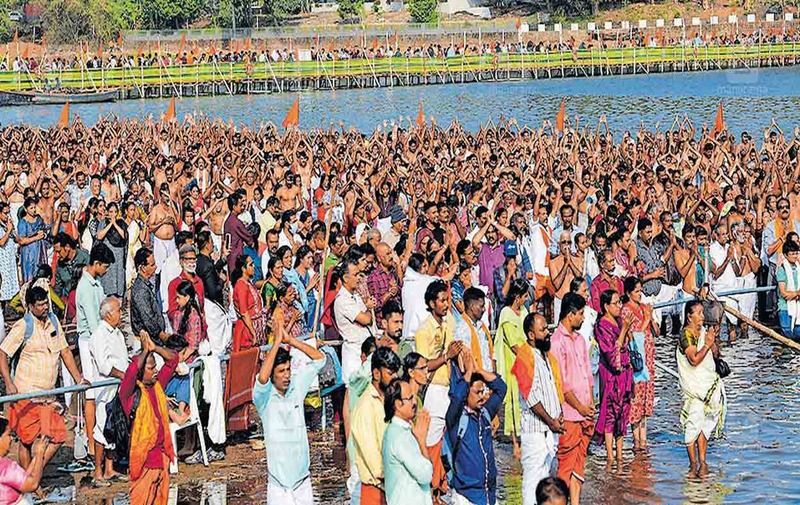
For 19 days and nights, the Bharathapuzha did not merely flow; it listened. It carried prayers, footsteps, silence, and surrender as lakhs of devotees gathered on its banks at Tirunavaya for what came to be known across the country as the Kerala Kumbh Mela. On Tuesday, the Maha Magha Mahotsavam drew to a close, but the spiritual echo it left behind is far from fading. The final day coincides with the Makam star in the Malayalam month of Magham, a time believed to be especially potent for spiritual renewal. As dawn breaks, the river hosts the most sacred ritual of the festival, the Magha Makam Amrita Snan, bringing together ascetics, seekers, and ordinary devotees in a moment of shared faith.
At 8 am, the Aarathi Ghat becomes the heart of the celebration. Naga sanyasis, clad in ash and symbolism, step into the waters alongside thousands of devotees. The Amrita Snan is not merely a ritual bath; it is believed to cleanse karmic burdens and renew spiritual intent. Following the holy dip, Yati Puja is performed, where spiritual preceptors are worshipped as living carriers of wisdom. This is succeeded by the Bhandara, a ritual of giving, where food, clothing, and offerings are distributed to sanyasis. These acts reaffirm a central idea of Sanatana Dharma—that spirituality is inseparable from service. As evening approaches, the Nila Aarathi marks the formal conclusion of the festival, with lamps reflecting on the river’s surface, symbolising continuity beyond closure.
Among the many rituals, one sight lingers deeply in the memory: the Pangat. Here, people from all walks of life sit together on the ground in a single row and eat the same food. Status dissolves. Titles disappear. Royalty and commoners share the same space, the same meal, and the same moment. Organisers describe the Pangat as the soul of the Kerala Kumbh Mela. It reflects an ancient but ever-relevant idea: that spiritual growth begins when social barriers fall. In a world often divided by identity and privilege, the simplicity of sitting together becomes a quiet revolution. The concluding days of the Mahotsavam were marked by intense spiritual activity. On Monday, special pujas were conducted near the yajna vedi for deities including Brahma, Mahalakshmi, Navamukundan, Thali Sivan, and Triprangottappan, under the guidance of former Sabarimala Melsanthi Areekkara Sudheer Namboothiri. Later that night, a Sarpa Bali was performed at the pond steps under the priesthood of Neelakandan Namboothirippad. These rituals, rooted in centuries-old traditions, brought together temple customs, Vedic chants, and community participation—reminding devotees that spirituality here is lived, not observed from a distance.
What makes this gathering historic is not just its scale but also its revival. The Mahamagham Mahotsavam, once known as Mamamgam, traces its origins to a belief that Parasurama himself conducted the first yagna on the banks of the Bharathapuzha for the welfare of the universe. For centuries, the event was held every 12 years as a grand spiritual and cultural congregation. Around 271 years ago, it began to fade into memory. This year, that silence was broken. Lakhs of devotees from across India and even abroad returned to Tirunavaya, not as spectators of history, but as participants in its renewal. Maha Mandaleshwar Swami Anandavan Bharati, who is leading the event, described the festival as exceeding all expectations. He noted that the banks of the Bharathapuzha have become witnesses to a collective spiritual awakening and moral consciousness. According to him, the success of this year’s Mahamagham has reshaped the future of the event. The Maha Magham will be celebrated with even greater splendour next year. And in 2028, Kerala will aim higher. The organisers are now planning a Maha Kumbh Mela on the lines of the Prayagraj Maha Kumbh, an ambition unthinkable until the overwhelming response of this revival.
Inspired by the scale, discipline, and devotion witnessed this year, preparations for 2028 will begin soon. The vision is clear: to transform Tirunavaya into a national and global spiritual destination, while retaining its distinct cultural identity. Unlike imitation, the planned Maha Kumbh will blend the grandeur associated with Prayagraj with Kerala’s unique spiritual traditions its temples, rituals, inclusiveness, and river-centric worship. If realised, it will mark a defining moment in India’s spiritual landscape, where the south hosts a gathering that resonates across the subcontinent. The Bharathapuzha flows on, as it always has. But now, it carries with it the memory of a revival, one that reconnects the present with a past nearly forgotten and points steadily toward a future where faith, equality, and collective spirit once again converge on its banks.
Romanticizing life and shaping stories from everything I see through my journalistic lens. Also, I love sports on the side.