"Dream, Dream, Dream! Conduct these dreams into thoughts, and then transform them into action."
- Dr. A. P. J. Abdul Kalam
"Dream, Dream, Dream! Conduct these dreams into thoughts, and then transform them into action."
- Dr. A. P. J. Abdul Kalam
12 Dec 2025
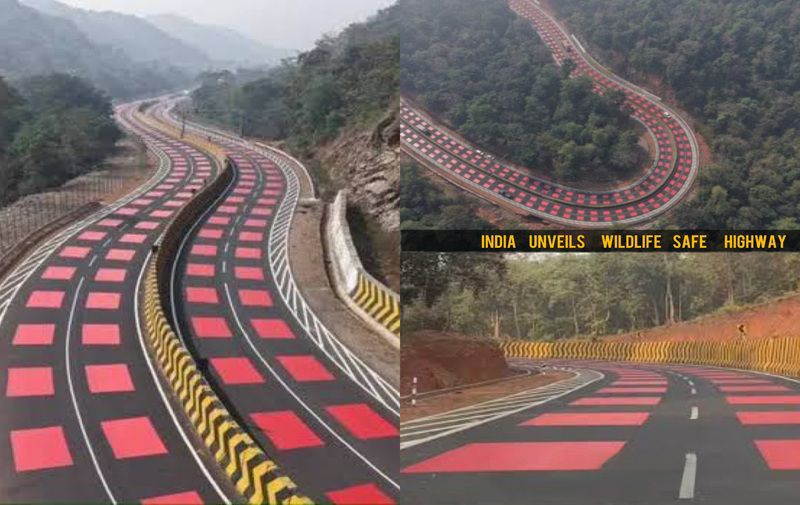
Sometimes change begins with heartbreak. A week after a young cheetah cub was killed in a hit-and-run in Gwalior, India, it became obvious that highways slicing through forests are far more dangerous for wildlife than we realize. That small life lost became a turning point—a call for safer, more compassionate roads. Responding quickly, the National Highways Authority of India (NHAI) introduced the country’s first-ever red tabletop markings on a 2-kilometre stretch of the Bhopal–Jabalpur National Highway (NH-45) in Madhya Pradesh. This stretch passes through the Veerangana Durgavati Tiger Reserve, an area known for the movement of tigers, deer, leopards, and other wild animals. What followed is now being seen as a pioneering example of wildlife-friendly road design in India.
At first glance, the new red surface looks like a splash of color on the black highway. But its job is far more serious. The markings are 5 mm thick, slightly raised, and painted in a bright, unmistakable red, a technique known as “tabletop marking.” The moment a vehicle drives over it, the driver experiences a subtle vibration and visual alert, instinctively slowing down. It is a physical and psychological signal that says, “You are entering a wildlife zone. Drive with care.” This is the first time such technology has been used on an Indian highway, making the NH-45 stretch a national example of innovation and responsibility.
Highways that slice through forests create invisible barriers in animal movement. Tigers cross to access new hunting zones. Deer migrate for food and water. Even smaller species depend on uninterrupted pathways for survival. But speeding vehicles often turn these routine movements into fatal encounters. Every time a wild animal attempts to cross, it takes a risk humans never see. A flash of headlights. A sudden honk. A moment too late.
Animal deaths on highways are not just numbers; they are broken lifelines. The red tabletop marking directly confronts this problem by compelling drivers to reduce speed at the most crucial, wildlife-dense points.
The red markings are part of a broader 11.9-kilometer expansion project that upgraded the highway from two to four lanes at a cost of ₹122.25 crore. But the expansion was done with wildlife protection at the center. Alongside the bright red tabletop zones, NHAI introduced several additional safety measures to create a complete protective shield for both wildlife and motorists. The highway now includes around 25 wildlife underpasses, allowing animals to move safely beneath the road instead of crossing it, with each underpass planned based on studied movement patterns of local species. To further reduce accidental encounters, chain-link fencing has been installed along the stretch, guiding animals away from the road and toward these safe crossings. Digital speed detectors have also been placed to warn drivers instantly when they exceed safe limits, reinforcing the need to slow down in this sensitive wildlife corridor. Additionally, clear white shoulder lines help motorists stay centered on the paved section, preventing them from drifting onto grassy edges where animals often appear. Together, these combined elements create a safer, more wildlife-friendly highway that respects both human travel and the natural movement of forest animals.
This initiative isn’t just about technology or infrastructure. It is about empathy, a recognition that forests are not empty land but shared homes. Every animal that crosses the road carries the same instinct for survival as humans. The red marking is a reminder to drivers that their journey passes through someone else’s home. India has hundreds of highways that snake through forested regions. As vehicle numbers grow and roads expand, wildlife corridors face increasing pressure. The success of this tabletop system could inspire similar installations across the country. Experts say this low-cost, high-impact technique could become a national standard. It blends engineering with ecology, a much-needed shift as India balances development with conservation. With these first red markings, India signals that development doesn’t need to come at the cost of wildlife. Roads can be safer. Drivers can be more alert. Animals can live with fewer threats. And sometimes, one small innovation can change how a nation cares for its forests.

Writing about what truly matters, good news and stories to remind the world - it is brighter than we think.