"Dream, Dream, Dream! Conduct these dreams into thoughts, and then transform them into action."
- Dr. A. P. J. Abdul Kalam
"Dream, Dream, Dream! Conduct these dreams into thoughts, and then transform them into action."
- Dr. A. P. J. Abdul Kalam
19 Jun 2026
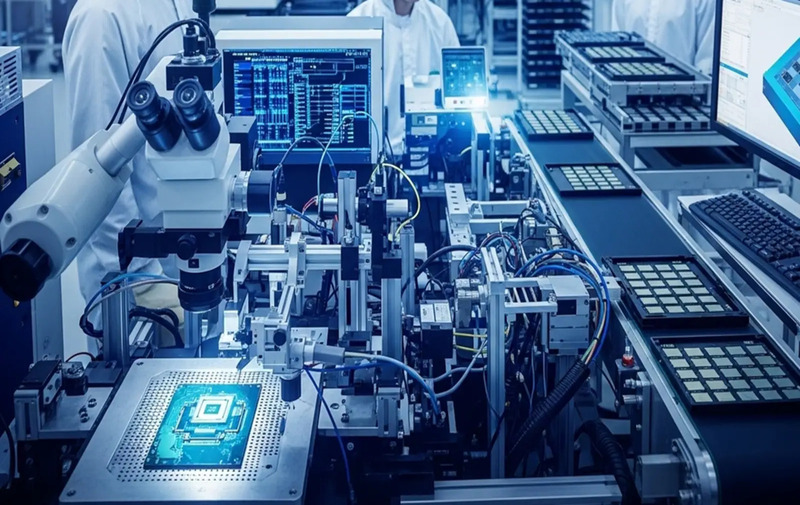
India’s electronics manufacturing story is entering a new era. What was once considered an impossible dream has transformed into one of the country’s biggest economic success stories, with the industry now touching an impressive ₹13 lakh crore.
Union Electronics and IT Minister Ashwini Vaishnaw on Wednesday unveiled an ambitious new goal—making electronics India’s second-largest export category after it climbed to the third position in 2025.
Speaking at the inauguration of a new plant of electronics manufacturing services company Jabil, the minister also announced that two more semiconductor plants will begin commercial production this year, strengthening India’s growing chip ecosystem.
India’s electronics manufacturing sector has witnessed remarkable growth over the past few years. According to a report in The Economic Times, as of March 2026, the country’s electronics production stood at around ₹12 lakh crore, while exports reached approximately ₹3.3 lakh crore. The latest figures now place the industry’s value at nearly ₹13 lakh crore.
Reflecting on the transformation, Vaishnaw noted that there was a time when the idea of exporting electronics from India seemed unrealistic. He stated that in the beginning, coming in the top 10 was a target. Last year, electronics became the third-largest export category, and now the aim is to make it the second-largest exported category.
A major contributor to the export boom has been smartphone manufacturing. India has emerged as a key production hub for global brands, with Apple accounting for a large share of the country’s electronics exports through its iPhone manufacturing ecosystem.
Government initiatives such as the Production Linked Incentive (PLI) scheme have attracted global companies and suppliers, creating thousands of jobs and expanding local manufacturing capabilities. The rapid rise of smartphone exports has helped India establish itself as a trusted destination in global supply chains.
India’s semiconductor ambitions are also beginning to take shape. According to Vaishnaw, two semiconductor plants are already operating at full commercial scale. Two additional facilities are set to join the network this year.
“The third plant will be inaugurated in July, and by December, the fourth semiconductor plant will begin full-fledged commercial manufacturing,” he announced. The development is expected to boost India’s capabilities in chip production and reduce dependence on imports, while positioning the country as an emerging player in the global semiconductor market.
Vaishnaw emphasized that achieving the next milestone would require collective effort. He called for close cooperation between the Centre and state governments, industry leaders, and India’s young talent pool to turn the vision into reality.
From a nation where electronics exports once seemed unimaginable, India is now aiming for a place among the global leaders. And with ₹13 lakh crore already achieved, the journey from manufacturing hub to export superpower is accelerating faster than ever.
.jpeg)
I have a Masters in Literature and a knack for spotting the silver lining! When I’m not chasing good news, you’ll find me nurturing my farm or lost in a good book.