"Dream, Dream, Dream! Conduct these dreams into thoughts, and then transform them into action."
- Dr. A. P. J. Abdul Kalam
"Dream, Dream, Dream! Conduct these dreams into thoughts, and then transform them into action."
- Dr. A. P. J. Abdul Kalam
1 May 2026
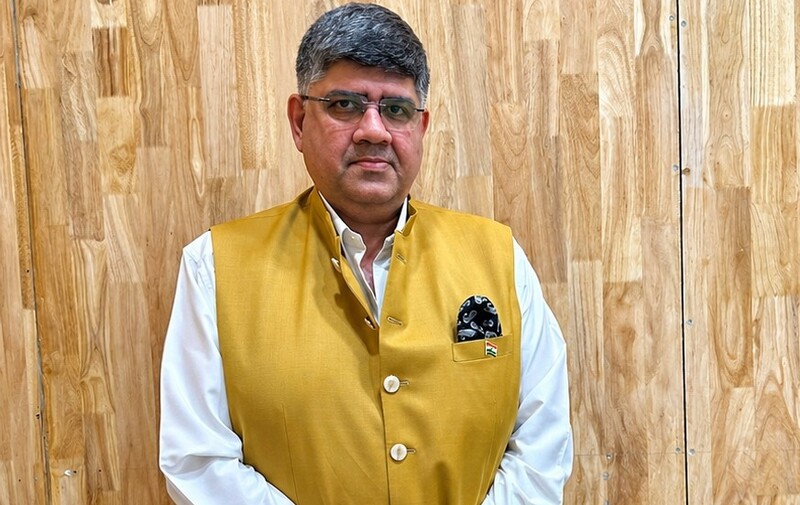
On a cold morning in rural North India, a farmer once stood helpless, watching heaps of paddy straw pile up after harvest. Burning it seemed like the only option, a choice that would choke cities with smog and silently damage the soil. But what if that same waste could become a source of energy, income, and hope? This is where Lt. Col. Monish Ahuja (Retd.) stepped in not as an entrepreneur but as a problem-solver shaped by discipline, service, and vision.
An alumnus of the prestigious National Defence Academy and trained in Nuclear Technology at Bhabha Atomic Research Centre, Lt Col Ahuja’s journey is anything but ordinary. After serving the nation in uniform, he chose a different battlefield: India’s growing environmental crisis.
In 2011, he founded Punjab Renewable Energy Systems Private Limited, a company that would go on to redefine how India looks at agricultural waste. What began as a startup soon grew into one of India’s leading biomass supply chain management companies. His idea was simple yet powerful: convert farm residues like paddy straw into biomass fuel. This not only prevents stubble burning but also creates a circular economy where waste becomes wealth.
Within just a few years, PRESPL scaled rapidly, reaching significant financial growth and attracting global investors. Today, it supports biomass-based power plants, industrial boilers, and bio-refineries across the country. Under his leadership, the company has become a force multiplier in India’s renewable energy ecosystem.
One of the most pressing environmental challenges in India has been stubble burning, particularly in northern states. Lt Col Ahuja took this issue head-on. Through initiatives like “Project 42,” he presented a comprehensive solution to policymakers, including top officials and institutions like NITI Aayog and the Prime Minister’s Office. His approach focused on building a strong biomass supply chain that connects farmers, industries, and energy producers. By creating demand for agricultural residue, he ensured farmers had a reason not to burn it. This shift is not just environmental; it is economic and social.
Beyond industry, Lt Col Ahuja’s work touches deeply personal aspects of life and death. Traditional Hindu cremation relies heavily on firewood, leading to large-scale deforestation. Recognizing this, he promoted Eco-Cremation using biomass briquettes made from agricultural waste. This innovation respects cultural practices while protecting the environment. In places like Chhatrapati Sambhaji Nagar in Maharashtra, nearly 89% of cremations have already shifted to this sustainable method. It is not just a technological change; it is a societal transformation. Families can now perform last rites with dignity, knowing they are also contributing to environmental conservation.
Lt Col Ahuja’s impact extends far beyond his company. As Chairman of the Confederation of Biomass Energy Industry of India (CBEII), he has become a strong voice for the bioenergy sector. He has worked closely with key government bodies like the Ministry of New and Renewable Energy, influencing policies that support biomass adoption. His collaborations span global institutions, including the World Bank and the International Renewable Energy Agency. His thought leadership has even reached global platforms, including a speaking engagement at the University of Cambridge, where he shared insights on sustainable business and green entrepreneurship.
Over the years, his contributions have been widely recognized. From being named “Biomass Energy Man of the Year” to receiving the prestigious Veterans Achievers Award in 2025, his accolades reflect not just success but meaningful impact. PRESPL itself has been honored multiple times for innovation, sustainability, and clean energy solutions. These awards are not just milestones; they are reminders of a mission that continues to grow.
What sets Lt Col Monish Ahuja apart is not just his achievements but his approach. His leadership is rooted in discipline from his military background and driven by a deep sense of responsibility toward society. He understands that sustainability is not just about technology; it is about people. Farmers, workers, communities, and future generations are all part of the ecosystem he is building. Through his work, he has created livelihoods, reduced pollution, and contributed to India’s goal of becoming a net-zero carbon emitter.
India stands at a critical point in its climate journey. The need for clean energy, sustainable practices, and innovative solutions has never been greater. Leaders like Lt Col Monish Ahuja (Retd) are showing the way forward. By turning agricultural waste into opportunity, he is not just solving a problem; he is building a movement. His story is a reminder that real change begins when knowledge meets purpose and when one individual decides to act.
From the discipline of the armed forces to the dynamic world of renewable energy, Lt Col Ahuja’s journey is proof that leadership, when guided by vision and compassion, can truly transform a nation.
Romanticizing life and shaping stories from everything I see through my journalistic lens. Also, I love sports on the side.