"Dream, Dream, Dream! Conduct these dreams into thoughts, and then transform them into action."
- Dr. A. P. J. Abdul Kalam
"Dream, Dream, Dream! Conduct these dreams into thoughts, and then transform them into action."
- Dr. A. P. J. Abdul Kalam
5 Jul 2026
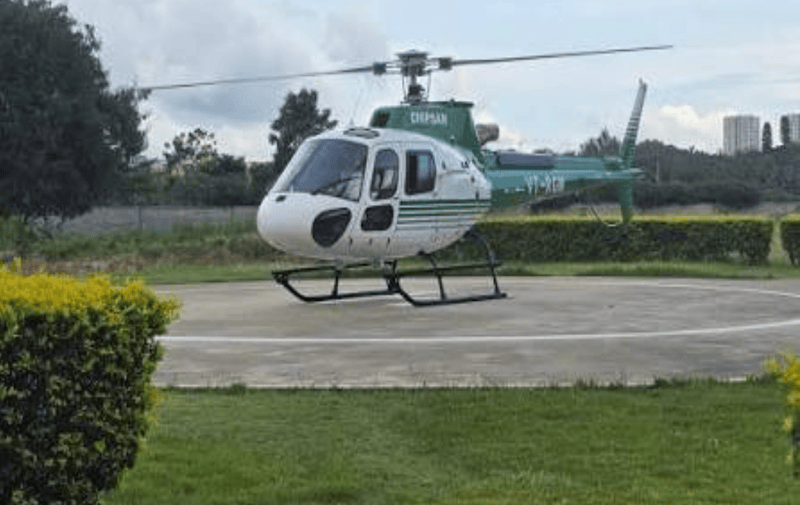
India has taken a significant leap in modernising its aviation sector with the approval of the country's first-ever Private Point-in-Space (PinS) Instrument Approach Procedure for helicopter operations. Introduced at Undavalli Heliport in Andhra Pradesh, the breakthrough is set to transform how helicopters operate, especially in locations lacking conventional navigation infrastructure.
Developed by the Airports Authority of India (AAI) and approved by the Directorate General of Civil Aviation (DGCA), the new procedure uses advanced satellite-based navigation technology, allowing helicopters to make safe, accurate, and reliable landings even in poor weather conditions.
The achievement represents another milestone in India's growing adoption of cutting-edge aviation technology and reinforces the country's ambition to build a world-class helicopter ecosystem.
Private Point-in-Space (PinS) procedures are designed specifically for helicopters. Unlike conventional instrument landing systems that require extensive ground-based infrastructure, PinS relies on satellite navigation to guide helicopters safely to designated landing points.
This makes it possible for aircraft to conduct precise instrument approaches at heliports located in remote regions, mountainous terrain, or urban environments where installing traditional navigation equipment may not be practical.
The Ministry of Civil Aviation highlighted that the technology is especially valuable during adverse weather conditions, when visibility is poor and safe navigation becomes even more critical. By enabling accurate all-weather approaches, PinS enhances operational safety while reducing weather-related disruptions.
Calling the approval a historic milestone, Civil Aviation Minister Ram Mohan Naidu said the introduction of India's first PinS Instrument Approach Procedure signals the beginning of a new chapter in helicopter operations. According to the minister, the technology will significantly improve flight safety, operational efficiency, and accessibility throughout the year. He reaffirmed the government's commitment to embracing advanced aviation technologies and developing a globally benchmarked, technology-driven helicopter ecosystem.
The approval also follows another major achievement announced just days earlier—the successful demonstration of India's first indigenous GAGAN-based precision approach by a commercial aircraft.
The impact of PinS extends far beyond routine helicopter flights. The Ministry of Civil Aviation believes the approval will pave the way for similar procedures at heliports across the country, creating safer and more dependable operations for a wide range of services.
Emergency medical helicopters will be able to reach hospitals more reliably during critical situations. Disaster response teams can operate more efficiently in challenging environments. Tourism operators, offshore industries, pilgrimage services, corporate aviation, and regional connectivity projects are also expected to benefit from improved safety and operational flexibility.
Most importantly, communities in remote and underserved areas could gain more dependable air access throughout the year.
Designed in accordance with DGCA regulations and the International Civil Aviation Organization (ICAO) Standards and Recommended Practices, the PinS procedure reflects India's commitment to global aviation best practices. As the nation continues expanding Performance-Based Navigation (PBN) and indigenous satellite navigation technologies, the successful implementation at Undavalli Heliport could become the blueprint for helicopter operations across India.
With satellite-guided precision now reaching the country's heliports, India is steadily building a smarter, safer, and more connected aviation future.
.jpeg)
I have a Masters in Literature and a knack for spotting the silver lining! When I’m not chasing good news, you’ll find me nurturing my farm or lost in a good book.