"Dream, Dream, Dream! Conduct these dreams into thoughts, and then transform them into action."
- Dr. A. P. J. Abdul Kalam
"Dream, Dream, Dream! Conduct these dreams into thoughts, and then transform them into action."
- Dr. A. P. J. Abdul Kalam
20 Dec 2025
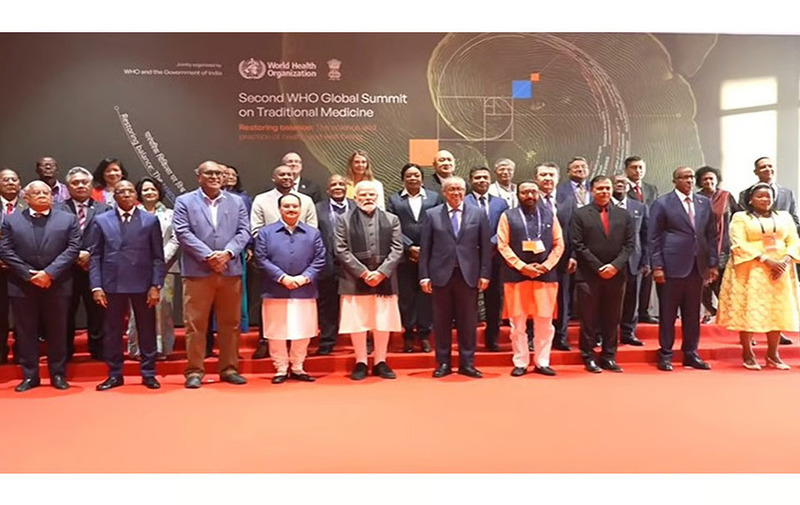
New Delhi became the epicenter of a transformative global health conversation as the Second WHO Global Summit on Traditional Medicine concluded on December 19. Jointly organized by the World Health Organization (WHO) and the Government of India, the summit brought together ministers, scientists, indigenous leaders, and traditional medicine practitioners from over 100 countries.
At its heart was a powerful idea: healthcare systems of the future cannot afford to ignore traditional knowledge. WHO Director-General Dr. Tedros Adhanom Ghebreyesus summed it up succinctly—science and tradition are not rivals, but partners.
Praising India’s leadership, Dr Tedros said the country has shown the world that tradition and innovation can progress hand in hand. From Ayurveda and Yoga to evidence-based research and digital platforms, India’s approach has demonstrated how ancient systems can be strengthened and not sidelined by modern science.
He credited Prime Minister Narendra Modi’s leadership for elevating traditional medicine onto the global health agenda and aligning it with the broader philosophy of “One Earth, One Health.” According to Tedros, this integrated vision is crucial at a time when the world faces rising healthcare costs, unequal access to services, and an increasing burden of lifestyle diseases.
The summit concluded with consensus on several concrete areas of action that could shape global healthcare in the years ahead. These include:
Common, risk-based regulations to ensure safety, quality and public trust in traditional medicine.
Protection of biodiversity and traditional knowledge, while respecting cultural heritage, intellectual property rights and equitable benefit-sharing.
Responsible use of digital technologies to improve research, data generation and access to healthcare services.
Integration of proven traditional medicine practices into national health systems, especially within private healthcare.
Dr Tedros emphasized that traditional medicine, when regulated and evidence-backed, can play a key role in addressing modern health challenges and inequities.
Addressing the closing ceremony, Prime Minister Narendra Modi acknowledged that traditional medicine has not always received the recognition it deserves. He stressed that winning public confidence through science, research and transparent regulation is essential to expand its global reach.
Citing Ashwagandha as an example, PM Modi highlighted how centuries-old remedies gained renewed global attention during the COVID-19 pandemic—driven by research and evidence-based validation. He also reiterated the global impact of Yoga, recalling how India’s sustained efforts led to June 21 being declared International Yoga Day by the United Nations with the support of over 175 countries.
The summit was not just about dialogue—it delivered action. PM Modi unveiled several major initiatives that strengthen India’s leadership in the traditional medicine space:
My Ayush Integrated Services Portal (MAISP): A unified digital platform for the Ayush sector.
Ayush Mark: Envisioned as a global quality benchmark for Ayush products and services.
Release of the WHO technical report on Yoga training and the book From Roots to Global Reach: 11 Years of Transformation in Ayush.
Launch of a commemorative postal stamp on Ashwagandha, symbolising India’s medicinal heritage.
Inauguration of the new WHO South-East Asia Regional Office complex in Delhi, which also houses the WHO India Country Office.
India’s pride was further underscored by the establishment of the WHO Global Centre for Traditional Medicine in Jamnagar, Gujarat, the first of its kind worldwide.
As the summit concluded, one message resonated clearly: India is no longer just the custodian of ancient healing traditions—it is a global platform shaping how those traditions enter mainstream healthcare responsibly.
By blending heritage with innovation and wisdom with evidence, India is helping the world reimagine healthcare as integrated, inclusive and sustainable—setting the tone for healthier societies across generations.
.jpeg)
I have a Masters in Literature and a knack for spotting the silver lining! When I’m not chasing good news, you’ll find me nurturing my farm or lost in a good book.