"Dream, Dream, Dream! Conduct these dreams into thoughts, and then transform them into action."
- Dr. A. P. J. Abdul Kalam
"Dream, Dream, Dream! Conduct these dreams into thoughts, and then transform them into action."
- Dr. A. P. J. Abdul Kalam
27 Apr 2026
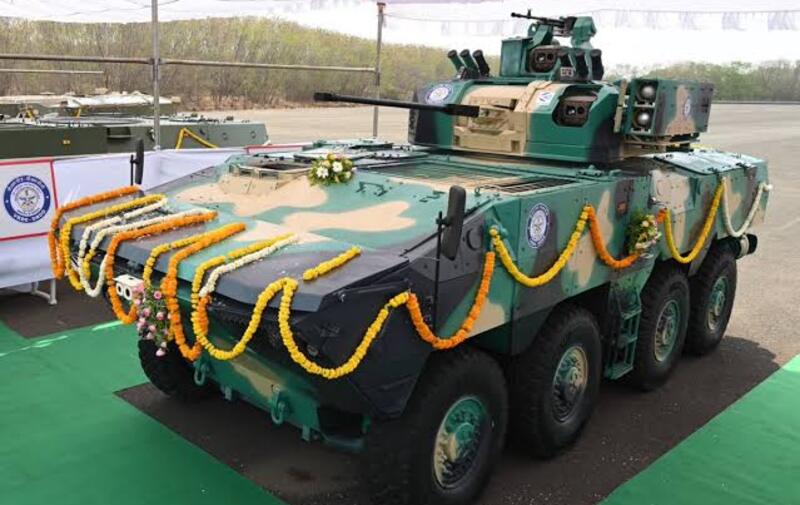
In a significant moment that reflects India’s growing confidence in its own capabilities, the Defence Research and Development Organisation unveiled the next-generation armoured platform, Vikram VT-21. Developed in collaboration with Tata Advanced Systems Limited and Bharat Forge, the Vikram VT-21 represents a powerful blend of public sector innovation and private sector expertise. Together, they have created a platform designed to meet the evolving challenges of modern warfare.
Modern warfare is no longer defined by sheer numbers alone. It demands speed, adaptability, precision, and resilience. The Vikram VT-21 has been designed with exactly these qualities in mind. Available in both tracked and wheeled variants, the platform can perform multiple roles, including those of an Infantry Combat Vehicle and an Armoured Personnel Carrier. This versatility ensures that the vehicle can adapt to different terrains and mission requirements, whether in deserts, mountains, or urban combat zones. At its core, the VT-21 is a response to the changing nature of conflict—where mobility and rapid response often determine success.
One of the most striking features of the Vikram VT-21 is its firepower. Equipped with an indigenously developed 30 mm crewless turret and a 7.62 mm PKT gun, the platform offers a powerful offensive capability. The inclusion of anti-tank guided missile systems further enhances its combat effectiveness. This means the vehicle is not only capable of engaging infantry targets but can also take on heavily armoured threats. The use of a crewless turret is particularly noteworthy. It improves safety for soldiers by allowing operations to be conducted remotely, reducing direct exposure to enemy fire.
In any combat scenario, the ability to move quickly and efficiently can be the difference between success and failure. The Vikram VT-21 excels in this area. Powered by a high-output engine paired with automatic transmission, the vehicle offers impressive speed and maneuverability. Its design allows it to cross difficult terrains and obstacles with ease. What truly sets it apart is its amphibious capability. Equipped with hydro jets, the VT-21 can move across water bodies without requiring additional support. This expands its operational reach and makes it a valuable asset in diverse environments. Built with STANAG level 4 and 5 protection standards, the platform offers strong resistance against ballistic threats and blasts. Its modular shielding allows for flexibility, enabling upgrades and adjustments based on mission needs. This combination of protection ensures that soldiers operating the vehicle can perform their duties with greater confidence, even in high-risk situations.
What makes the Vikram VT-21 even more remarkable is the speed at which it was developed. Completed in just three years, the project showcases India’s growing efficiency in defence innovation. The presence of key figures like Samir V. Kamat at the unveiling highlights the importance of this achievement. It reflects a coordinated effort between scientists, engineers, and industry leaders working toward a common goal. Earlier attempts in 2007 and 2014 did not result in final contracts. However, the renewed push under the Future Infantry Combat Vehicle programme, initiated in 2021, aims to procure 1,750 tracked vehicles. The Vikram VT-21 fits into this broader vision. It represents a step toward achieving self-reliance in defence manufacturing, reducing dependence on foreign imports, and strengthening national security.
The unveiling of the Vikram VT-21 is a clear indication of India’s commitment to defence indigenisation. By developing advanced platforms within the country, India is not only strengthening its military but also building a robust industrial ecosystem. Collaborations between organisations like DRDO and private companies signal a new approach one that combines innovation with efficiency and scale. In a world where security challenges continue to evolve, India’s ability to design and produce its own advanced defence systems becomes increasingly important. The VT-21 is a step in that direction, a step that brings confidence, capability, and a sense of pride. And as it moves from prototype to deployment, it will not just defend borders it will symbolize the strength of a nation building its future with its own hands.

Romanticizing life and shaping stories from everything I see through my journalistic lens. Also, I love sports on the side.