"Dream, Dream, Dream! Conduct these dreams into thoughts, and then transform them into action."
- Dr. A. P. J. Abdul Kalam
"Dream, Dream, Dream! Conduct these dreams into thoughts, and then transform them into action."
- Dr. A. P. J. Abdul Kalam
10 Dec 2025
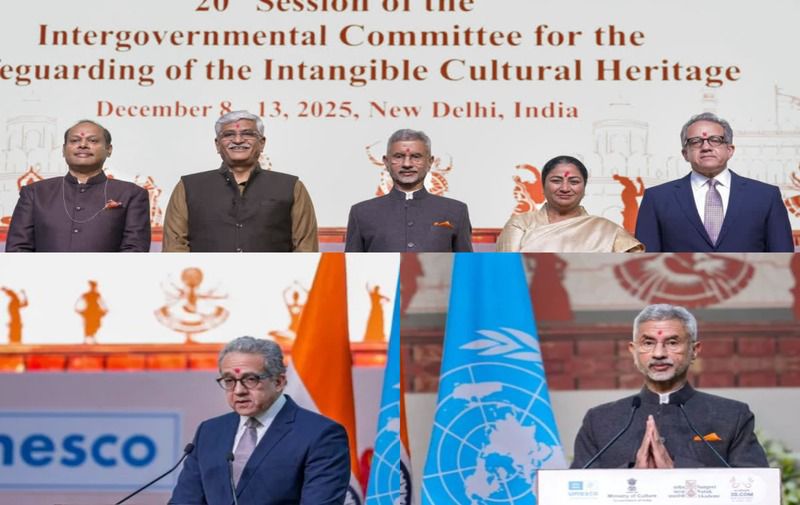
The 20th session of UNESCO’s Intergovernmental Committee for the Safeguarding of Intangible Cultural Heritage began with great anticipation and cultural vibrancy at Delhi’s iconic Red Fort on December 8, 2025. Spread across six days until December 13, the event brings together global delegates, cultural experts, researchers and policymakers from across the world. The majestic 17th-century fortress, a UNESCO World Heritage Site, stands as a symbol of India's rich history, making it the perfect venue for discussions centred on humanity’s living cultural traditions. India is not just the host but also a proud founding member of UNESCO. The country has long championed cultural exchange, scientific cooperation and educational development as pillars of global peace. This year’s session holds special significance as it reaffirms India’s commitment to preserving traditions that shape collective memory, identity and continuity.
External Affairs Minister Dr. S. Jaishankar set the tone for the week-long discussions in a powerful inaugural speech. Describing intangible heritage as a cultural domain “owned by all and guarded by many,” he emphasized that cultural diversity is at the heart of global harmony. According to him, many international challenges arise when societies attempt to overlook or suppress the world’s plurality. His message highlighted the need for inclusivity, coexistence and respect for diverse cultural expressions. Addressing the international gathering, Jaishankar spoke about India’s centuries-old cultural practices, from rituals and craftsmanship to knowledge systems that continue to influence the world. He reminded delegates that India’s intellectual and artistic heritage has been shaped by contributions from countless communities over time. This, he said, is what gives India a unique identity as a living civilization that celebrates unity through diversity.
Although not physically present, Prime Minister Narendra Modi shared a heartfelt message through Union Culture Secretary Vivek Aggarwal. Modi underscored the emotional and moral importance of intangible heritage, calling it the “memory of societies.” He reflected on how traditions, whether festivals, crafts, languages, songs or rituals, shape identities, enhance social harmony and strengthen the sense of belonging among communities. PM Modi’s message carried a strong connection. He said that intangible heritage provides continuity in a rapidly changing world and reminds societies of the values they must carry forward.
For the 2025 session, India’s Permanent Delegate to UNESCO, H.E. Vishal V. Sharma, serves as the Chair of the Committee. During the opening ceremony, Sharma highlighted the key responsibilities of the gathering: reviewing new nominations to UNESCO’s Intangible Cultural Heritage Lists, evaluating safeguarding measures and assessing the status of previously inscribed cultural elements. Sharma stated that communities are at the heart of intangible heritage and that their participation is essential for the survival of traditional practices. He emphasized that safeguarding heritage is not about placing culture in a museum but about ensuring that communities continue to practice, teach and celebrate their traditions in everyday life.
The inaugural event showcased the spirit of India’s unparalleled cultural diversity. Delegates were welcomed with vibrant performances of Bhangra from Punjab, Bihu from Assam, and tribal dance forms from different regions. As performers filled the entrance of the Red Fort with colour, music, rhythm and joy, the atmosphere became a visual reminder of what intangible heritage truly represents: the lived experiences, expressions and creativity of people. These performances did more than entertain; they symbolized India’s message to the world: that cultural traditions are alive, evolving and deeply rooted in community pride.
The Red Fort, known for its towering red sandstone walls and Mughal architectural grandeur, has witnessed centuries of historical transitions. Hosting the UNESCO session here adds a profound layer of cultural symbolism. Closed to the public from December 5 to 14, the site has transformed into a global cultural meeting ground. Walking through the expansive courtyards and palaces, delegates are offered a glimpse into India’s artistic and political past. The venue weaves together the essence of tangible and intangible heritage, with stone structures standing as physical history and the discussions within focusing on traditions, performances, knowledge and customs that remain alive in people’s hearts.
Throughout the week, the Committee will examine safeguarding plans, review nominations from multiple countries, consider requests for international assistance and explore possibilities for cross-border collaboration. UNESCO’s overarching objective remains clear: to protect intangible cultural heritage across the world and ensure that traditions are passed on to future generations. The session provides an opportunity for nations to share experiences, challenges and best practices. In an increasingly globalized world, intangible heritage faces threats from modernization, migration, homogenization and loss of traditional knowledge. The 2025 session aims to address these concerns with sensitivity, inclusivity and innovation.
Romanticizing life and shaping stories from everything I see through my journalistic lens. Also, I love sports on the side.