"Dream, Dream, Dream! Conduct these dreams into thoughts, and then transform them into action."
- Dr. A. P. J. Abdul Kalam
"Dream, Dream, Dream! Conduct these dreams into thoughts, and then transform them into action."
- Dr. A. P. J. Abdul Kalam
28 Apr 2026
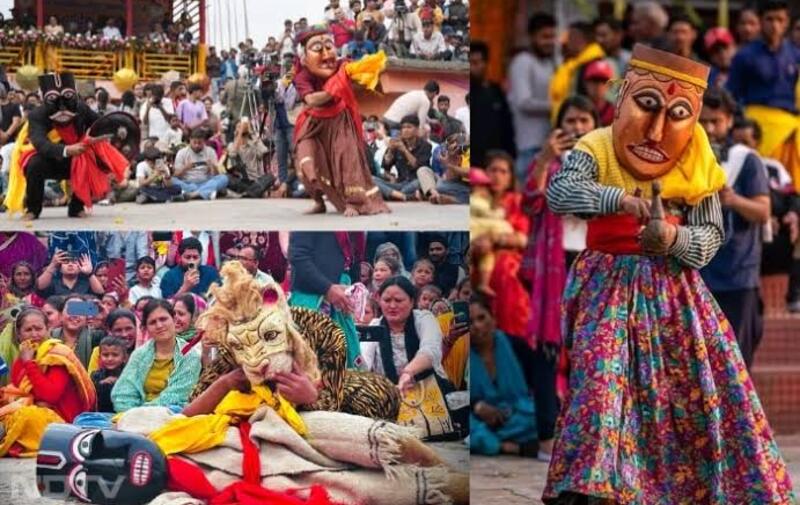
High in the quiet folds of the Himalayas, where time seems to move at its own pace, a village gathers each year to bring history, faith, and art to life. In Saloor-Dungra, the air fills with drumbeats, chants, and the rhythmic movement of masked performers as the sacred Ramman Festival begins. This is not just a celebration; it is a living tradition, where every movement tells a story and every face behind a mask carries generations of memory. Recognised by UNESCO as an Intangible Cultural Heritage of Humanity in 2009, Ramman stands as a rare cultural treasure that continues to thrive in its original form, untouched by modern replication.
The Ramman Festival is dedicated to the village deity, Bhumiyal Devta, believed to protect and bless the community. Celebrated annually after the harvest festival of Baisakhi, the dates are announced by the village priest, adding an element of anticipation and sacred rhythm to the event. For around ten days, the village transforms into a stage where rituals and performances unfold in the courtyard of the local temple. Each day begins with prayers and processions, as the deity is taken around the village, symbolically connecting every household to the divine presence. But Ramman is more than a religious ritual; it is a cultural expression of the community’s identity, shaped over nearly 500 years.
What makes Ramman truly unique is its blend of ritual theatre and folk performance. The festival begins with invocations to Lord Ganesha, followed by a series of dances and enactments that reflect mythology, history, and everyday life. Masked performers step into the roles of gods, traders, herders, and legendary figures, each performance offering a glimpse into different aspects of human experience. The masks themselves, carved from the wood of the Bhoj tree, carry an artistic legacy passed down through generations.
One of the central highlights is the enactment of the Ramkatha, the story of Lord Rama, performed through a complex sequence of 324 rhythmic beats and steps. Alongside this, traditional forms like Jagar musical storytelling of local legends add depth and emotion to the performances. There are moments of humour too, such as the Maal Nritya, where a historical battle is reimagined in a light-hearted manner, and the Koorjogi ritual, where villagers engage in playful interaction by throwing weeds at each other. These moments remind us that Ramman is as much about joy and togetherness as it is about devotion.
At its heart, Ramman belongs to the people of Saloor-Dungra. Every household plays a role in organising and sustaining the festival. From priests conducting rituals to musicians beating drums, from performers enacting stories to families offering prayers, the entire village becomes part of the celebration. Roles are carefully defined and passed down through generations. The Brahmins lead the rituals, the Jagaris sing the sacred songs, and the drummers from the Das community bring rhythm to the performances. Each contribution, regardless of social background, is essential to the festival’s success. This shared responsibility creates a deep sense of belonging. Ramman is not performed for an audience; it is lived by a community.
Despite its beauty and cultural significance, Ramman faces challenges in the modern world. With changing lifestyles, migration, and the influence of technology, fewer young people are able to dedicate themselves fully to preserving such traditions. The art forms involved dance, music, mask-making, and storytelling are transmitted orally, making them vulnerable to fading away if not actively practiced. Limited awareness beyond the region also adds to the risk of this heritage being overlooked. Yet, efforts by organisations like the Indira Gandhi National Centre for the Arts have helped bring attention to Ramman, introducing it to a wider audience while respecting its authenticity.
As the final day of the festival arrives, the village gathers for a grand feast, sharing the prasada as a symbol of unity and gratitude. The masks are set aside, the drums fall silent, but the spirit of Ramman lingers. It lives on in the stories told, in the memories created, and in the promise that it will return the following year. Ramman is not just a festival. It is a living story, one that continues to be written by the people who believe in it, celebrate it, and carry it forward. And in that quiet Himalayan village, where gods dance and stories breathe, tradition still finds a way to endure.
Romanticizing life and shaping stories from everything I see through my journalistic lens. Also, I love sports on the side.