"Dream, Dream, Dream! Conduct these dreams into thoughts, and then transform them into action."
- Dr. A. P. J. Abdul Kalam
"Dream, Dream, Dream! Conduct these dreams into thoughts, and then transform them into action."
- Dr. A. P. J. Abdul Kalam
22 Jun 2026
While many celebrate Father’s Day with gifts and greetings, a family in Delhi has a far more profound reason to celebrate this year, thanks to an 18-year-old son’s life-saving decision
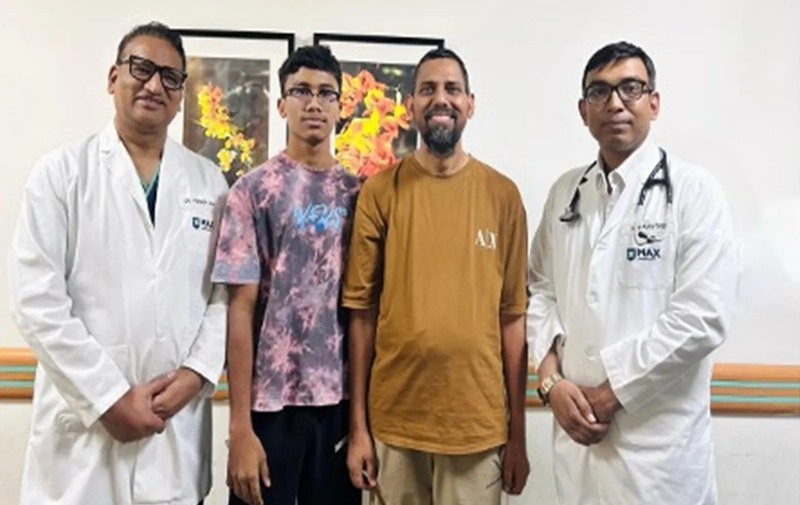
As many students awaited college admission lists after their Class XII examinations, 18-year-old Ali Raza found himself preparing for a life-changing journey. His father, Abid Raza, 49, had been diagnosed with kidney failure, and a transplant offered the best chance of restoring his health.
The family searched for a suitable donor among relatives, but no one proved compatible. Ali, the youngest son, emerged as the only viable donor. Realizing that his father’s survival depended on him, the teenager readily stepped forward.
However, there was another challenge. Father and son belonged to different blood groups, making it an ABO-incompatible transplant—a procedure that requires extensive preparation and medical expertise.
According to a report in The Indian Express, the case was particularly complex because of both the blood-group mismatch and the rare autoimmune disease that had caused Abid’s kidney failure.
Dr. Paresh Jain, Senior Director of Urology and Kidney Transplant Surgery at Max Super Speciality Hospital, Patparganj, explained that decades ago, such blood-group incompatibility would have ruled out transplantation within a family. Today, however, advances in transplant medicine have made even ABO-incompatible and HLA-incompatible transplants possible, significantly expanding the donor pool for patients with end-stage kidney disease.
To minimize the risk of rejection, doctors performed plasmapheresis, a process that filters specific antibodies from the recipient’s blood. Abid was also placed on an intensive immunosuppressive regimen to ensure that his body accepted the transplanted organ.
Ali’s age added another layer of complexity to the case. Though Indian guidelines permit kidney donation from the age of 18, doctors exercise particular caution with donors between 18 and 21 years.
Dr. Jain noted that extensive medical evaluations were conducted to ensure that Ali would remain healthy with one kidney. These included a CT renal angiogram to study the anatomy of his kidneys and a DTPA scan to assess the contribution of each kidney to overall function.
The assessments confirmed that the kidney he retained would comfortably support a long and healthy life while providing maximum benefit to his father.
The transplant was successful, and Ali was discharged from the hospital within four days. Though temporarily away from sports and physical activities, he has developed a deeper appreciation for his health and understands the responsibility that comes with living with one kidney.
Abid, meanwhile, has already experienced significant improvements in his condition. Doctors have advised him to remain indoors and follow a strict homemade diet while his immune system adjusts to the medications that prevent organ rejection.
Ali is now looking ahead to pursuing a B.Sc. in Computer Science. He believes that donating a kidney has not halted his dreams but has simply given his life a different direction.
For many, Father’s Day is marked by cards and celebrations. For Ali Raza, it became an opportunity to give something far greater—a second chance at life.
.jpeg)
I have a Masters in Literature and a knack for spotting the silver lining! When I’m not chasing good news, you’ll find me nurturing my farm or lost in a good book.