"Dream, Dream, Dream! Conduct these dreams into thoughts, and then transform them into action."
- Dr. A. P. J. Abdul Kalam
"Dream, Dream, Dream! Conduct these dreams into thoughts, and then transform them into action."
- Dr. A. P. J. Abdul Kalam
8 Apr 2026
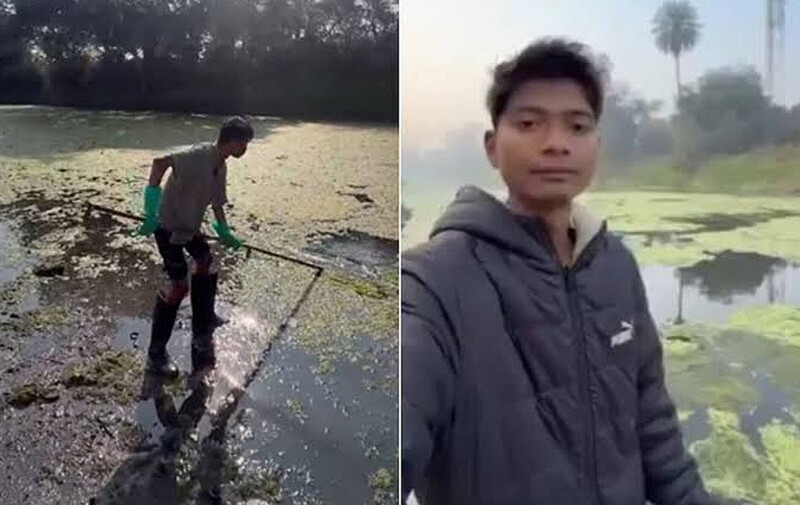
In a world where problems often feel too big to solve, most people choose to look away. But in the small town of Biaora, a 20-year-old chose to step forward. Bittu Tabahi did not have a team, funding, or a large organisation backing him. What he had instead was something far more powerful—a sense of responsibility. And that was enough to begin.
The Ajnar River was once a natural lifeline for the region. Like many rivers across India, it carried not just water, but memories, livelihoods, and life itself. Over time, however, it became heavily polluted. Plastic waste floated on its surface. Algae choked its flow. Debris gathered along its banks. What was once a source of life had turned into a symbol of neglect. For most, it was just another unfortunate reality. For Bittu, it was a call to act. Bittu made a quiet but powerful decision. He stepped into the polluted waters of the Ajnar River. Initially, a few friends joined him. But as days passed, the support faded. The task was too big, too messy, and too exhausting. Soon, Bittu was left alone. But he didn’t stop.
Cleaning a river is not easy. Armed with basic tools and his bare hands, Bittu waded through dirty water, pulling out plastic, algae, and layers of accumulated waste. Each day brought physical exhaustion. But the bigger challenge was not the dirt; it was the doubt. People questioned him. Some laughed. Others accused him of doing it for attention on social media. Many told him it was impossible. Yet, every time he heard those words, he chose to respond not with arguments but with action. Because sometimes, the best answer is persistence.
Days turned into weeks. Weeks turned into visible change. Slowly, the river began to respond. The water started looking clearer.
The flow improved. The heavy layer of waste began to disappear. What once seemed impossible was now visible to everyone. The same people who doubted him began to notice the difference. Because change, when it happens, cannot be ignored. Bittu’s efforts did not remain confined to his town. His story went viral, reaching thousands across the country and even catching the attention of Anand Mahindra.
Known for sharing inspiring stories, Mahindra highlighted Bittu’s work, turning a local effort into a national conversation. But beyond recognition, what mattered more was the message his story carried. That change does not always need big systems. Sometimes, it just needs one person who refuses to give up.
At its core, Bittu Tabahi’s journey is not just about cleaning a river. It is about courage. It is about choosing to act when others hesitate.
It is about believing that even the smallest effort can create ripples of change. For many of us, environmental issues feel distant, something governments or organisations need to fix. But Bittu reminds us that responsibility is personal. That every river, every street, every space we ignore… is still ours. Bittu’s story also challenges a common belief that impact requires scale. He did not start with a plan to go viral. He did not wait for perfect conditions. He simply started. And that is often the hardest step. Because once action begins, change follows.
In a time when attention often shifts quickly, stories like Bittu’s stay. Not because they are loud, but because they are real. He didn’t wait for permission. He didn’t wait for recognition. He didn’t wait for others. He simply cared enough to act. Bittu Tabahi’s journey may have started with one river. But its impact goes far beyond. It reminds us that the power to create change does not lie in resources; it lies in intent.
Romanticizing life and shaping stories from everything I see through my journalistic lens. Also, I love sports on the side.