"Dream, Dream, Dream! Conduct these dreams into thoughts, and then transform them into action."
- Dr. A. P. J. Abdul Kalam
"Dream, Dream, Dream! Conduct these dreams into thoughts, and then transform them into action."
- Dr. A. P. J. Abdul Kalam
29 Jul 2026
For most mountaineers, standing atop Mount Everest is the achievement of a lifetime. But high above the clouds, where oxygen is scarce and temperatures plunge below -30°C, survival itself becomes uncertain.
In May 2023, in the infamous 'death zone' just below Everest's summit, one man's dream was fading into tragedy. A Malaysian climber was found hanging from a rope, exhausted, freezing and barely conscious. At that altitude, even saving yourself is a monumental challenge. Rescuing another person is considered almost impossible. Yet, that is exactly what Gelje Sherpa chose to do.
Thirty-year-old Gelje Sherpa was guiding a Chinese client towards Everest's 8,849-metre summit when he noticed the helpless climber near the Balcony area. The Malaysian was trembling uncontrollably, unable to continue, with every passing minute bringing him closer to death.
Gelje knew the risks. Stopping meant giving up precious time, and perhaps the summit itself. Instead of walking past, he made a remarkable decision. He convinced his client to abandon the climb and descend, explaining that saving a human life mattered more than reaching the peak.
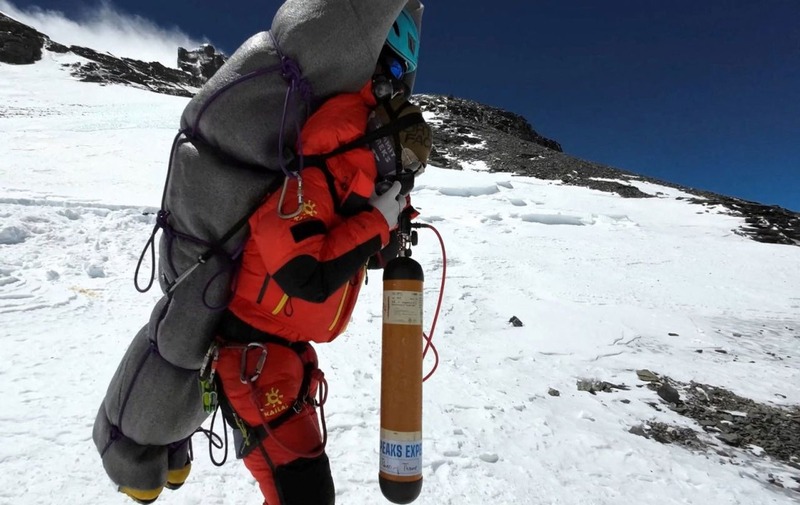
What followed was an extraordinary rescue. Gelje hauled the climber nearly 600 metres down from the Balcony to the South Col over six exhausting hours. There, fellow Sherpa Nima Tashi Sherpa joined the operation.
The rescuers wrapped the climber in a sleeping mat before dragging him across snow-covered slopes. When the terrain became too difficult, they lifted him onto their backs, taking turns carrying him down to Camp III at an altitude of over 7,100 metres. From there, a helicopter equipped with a long-line rescue system flew him safely to Everest Base Camp.
Officials later described the operation as exceptionally rare. At such extreme altitudes, even helicopters have limited capabilities, and rescuers themselves risk severe altitude sickness, frostbite and exhaustion.
Sherpas are often celebrated for helping climbers conquer Everest, but their courage extends far beyond guiding expeditions. They carry supplies, fix ropes, support exhausted climbers and, when necessary, put their own lives on the line to save others.
Gelje Sherpa's decision reminds us that greatness is not always measured by standing on the world's highest peak. Sometimes, it is measured by stepping away from personal glory so that someone else gets another chance at life. In a place where countless dreams end, one Sherpa proved that compassion can rise even higher than Everest itself.
.jpeg)
I have a Masters in Literature and a knack for spotting the silver lining! When I’m not chasing good news, you’ll find me nurturing my farm or lost in a good book.