"Dream, Dream, Dream! Conduct these dreams into thoughts, and then transform them into action."
- Dr. A. P. J. Abdul Kalam
"Dream, Dream, Dream! Conduct these dreams into thoughts, and then transform them into action."
- Dr. A. P. J. Abdul Kalam
19 Feb 2026
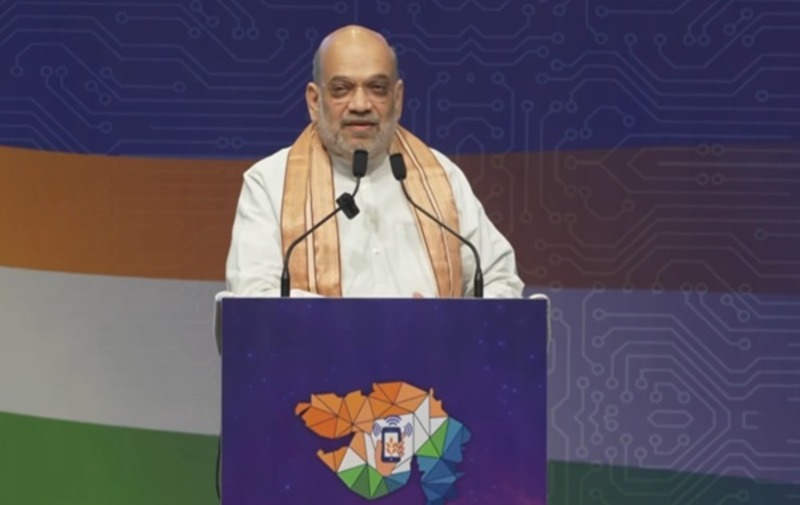
On the banks of the Sabarmati, a quiet but potentially transformative reform in India’s welfare architecture has taken shape. Union Home and Cooperation Minister Amit Shah launched the country’s first Central Bank Digital Currency (CBDC)-based Public Distribution System (PDS) at Mahatma Mandir in Gandhinagar, Gujarat. With this initiative, Gujarat has become the first state to integrate the Reserve Bank of India-authorised digital rupee into food grain distribution. At its heart, the reform seeks to answer a long-standing challenge: how to ensure that subsidised food grains reach the rightful beneficiary without leakage, corruption or delay. For millions of families dependent on ration supplies under welfare schemes, this question is not abstract it determines daily meals and household survival.
India operates the world’s largest food security program, with nearly 80 crore beneficiaries receiving subsidised or free rations under various schemes. However, the Public Distribution System has historically grappled with issues such as duplicate ration cards, diversion of grains, middlemen interference and lack of transparency. The CBDC-based framework aims to close these gaps. By issuing digital wallet tokens containing precise details of the item name, quantity and price, the system ensures that subsidies are credited directly and can be used exclusively for purchasing food grains. These tokens cannot be diverted for other purposes, eliminating misuse. According to officials, digitisation has already led to the cancellation of 2 to 3 crore fake ration cards nationwide. Integrating CBDC adds another layer of traceability and accountability, creating what the government describes as a “leak-proof” model.
Under the pilot project, more than 26,000 families across Ahmedabad, Surat, Anand and Valsad districts will receive digital tokens in their wallets. Beneficiaries can procure their rations by scanning a QR code or using OTP verification sent via SMS even on basic mobile phones. The system is integrated with Aadhaar-based biometric authentication and the Reserve Bank of India’s digital payment infrastructure. When a beneficiary visits a fair price shop or a Grain ATM, the digital token is redeemed seamlessly, ensuring precise delivery of entitlement. A highlight of the initiative is the inauguration of the ‘Annapurti’ Grain ATM, a Made-in-Gujarat innovation capable of dispensing up to 25 kilograms of grain in just 35 seconds. The automated machine operates round the clock, eliminating long queues and ensuring accuracy in weight without even a gram’s deviation. For daily wage workers who cannot afford to stand in line during working hours, the 24/7 availability of Grain ATMs represents more than convenience it restores flexibility.
While launching the initiative, Amit Shah also addressed concerns around international trade agreements. He reaffirmed that in Free Trade Agreements such as those with the US and the EU, India’s agriculture, dairy and fisheries sectors have been comprehensively protected. He noted that procurement at Minimum Support Price has increased significantly over the past decade, and the agriculture budget has risen manifold. By safeguarding domestic producers while expanding global market access, the government aims to balance farmer welfare with trade growth. For farmers, cattle rearers and fishermen, such assurances are critical.
Officials have indicated that the CBDC-based model will be expanded nationwide over the next three to four years. Union Territories such as Chandigarh, Puducherry and Dadra and Nagar Haveli are expected to adopt the framework soon. If successfully implemented, Gujarat’s experiment could serve as a blueprint for a transparent and technology-driven food security ecosystem across India. By combining CBDC, biometric authentication and automated Grain ATMs, the state has introduced a system that embodies the principle of “Minimum Government, Maximum Governance.” Food security is more than distribution; it is about trust between the state and its citizens. In digitising the PDS, the government is attempting to rebuild that trust through transparency and precision. Whether this model achieves its full promise will depend on implementation, digital literacy and infrastructure readiness. But for now, on the soil of Gujarat, a new digital pathway toward ensuring that food reaches every plate has begun.

Writing about what truly matters, good news and stories to remind the world - it is brighter than we think.