"Dream, Dream, Dream! Conduct these dreams into thoughts, and then transform them into action."
- Dr. A. P. J. Abdul Kalam
"Dream, Dream, Dream! Conduct these dreams into thoughts, and then transform them into action."
- Dr. A. P. J. Abdul Kalam
8 Apr 2026
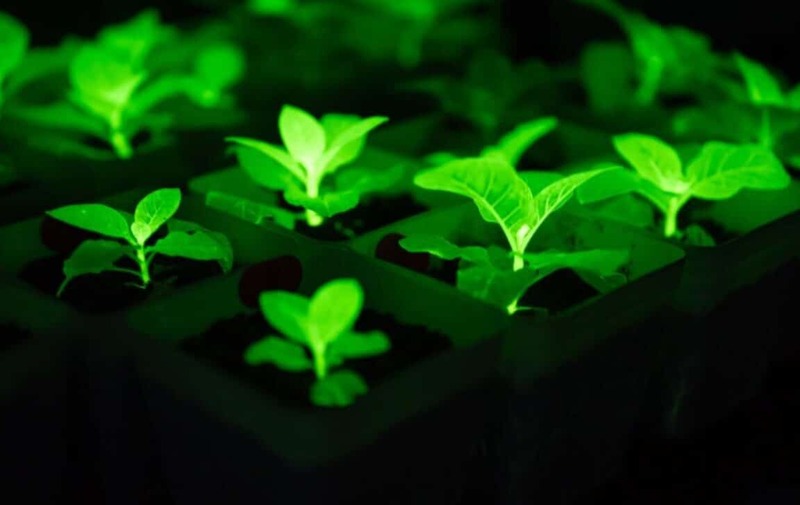
Imagine walking through a garden at night: no streetlights, no electricity, yet everything around you softly glows. Leaves shimmer, flowers radiate gentle light, and the entire space feels like a scene from a dream. This is no longer science fiction. Led by Li Renhan, a team of scientists has successfully gene-edited more than 20 plant species to glow in the dark. By transferring light-producing genes from fireflies and fungi into plants, they have created something extraordinary: living, breathing light sources. And somehow, it all began with a childhood memory.
For Li Renhan, this innovation didn’t start in a lab—it started in a village. Growing up in rural China, nights were dark and quiet. With no electricity, he would lie in a hammock in his grandfather’s bamboo grove, surrounded by silence. And then, slowly, the fireflies would appear. Tiny flickers of light, landing softly on his arms. That simple, magical experience stayed with him. Years later, as a scientist, he asked a question that would change everything: What if plants could glow like fireflies?
At the heart of this innovation lies a fascinating natural phenomenon: bioluminescence. Fireflies and certain fungi produce light through chemical reactions within their bodies. Scientists studied these mechanisms and successfully transferred the responsible genes into plants. The result? Plants that can emit their own natural light. Unlike artificial lighting, these glowing plants don’t need electricity. They rely on basic resources—water, nutrients, and natural biological processes. This makes them not only beautiful but also energy-efficient and environmentally friendly. So far, over 20 species, including orchids, sunflowers, and chrysanthemums, have been engineered to glow softly in the dark.
When these plants were showcased at the Zhongguancun Forum, the reaction was one of awe. Visitors saw flowers glowing without any wires, bulbs, or batteries. It felt almost unreal like stepping into the world of Avatar, where nature itself radiates light. Li Renhan himself described the vision vividly: valleys filled with glowing plants, transforming landscapes into immersive experiences. It’s not hard to imagine. A park illuminated by living trees. Pathways glowing softly under your feet. Cities that light up not with harsh artificial lights, but with gentle, natural radiance.
While the visual appeal is undeniable, the true potential of glowing plants lies in sustainability. Traditional lighting consumes vast amounts of electricity and contributes to carbon emissions. In contrast, these bioluminescent plants offer a low-energy alternative. They require no power grids. No fuel. Just water and fertilizer. This could revolutionize urban lighting, especially in parks, gardens, and public spaces. Imagine cities reducing energy consumption simply by integrating living light sources into their design. It’s a small change with massive implications.
Interestingly, this is not the only approach scientists are exploring. Researchers at South China Agricultural University took a different route by injecting phosphorescent particles into plants. These particles absorb sunlight or LED light during the day and release it slowly at night, creating a temporary glow. While this method produces brighter light, it requires external charging. In contrast, gene-edited plants generate their own light continuously.
Both approaches highlight the same idea: nature can be reimagined in ways we never thought possible. The implications of this research go far beyond glowing plants. The same genetic techniques are already being used to develop disease-resistant crops, improve food security, and even aid in medical research. By understanding how genes can be modified, scientists are opening doors to solutions for some of the world’s biggest challenges. In that sense, glowing plants are just the beginning. They are a symbol of what is possible when curiosity meets creativity.
The idea of cities lit by plants may still feel futuristic, but it is closer than we think. As research continues, these glowing plants could become part of everyday life, transforming how we think about energy, design, and our relationship with nature. And perhaps, one day, we will look back and realize that the future didn’t just arrive through machines and wires. It bloomed quietly… like a flower glowing in the dark. Because sometimes, the brightest ideas don’t come from inventions; they come from nature itself, waiting to be rediscovered.

Writing about what truly matters, good news and stories to remind the world - it is brighter than we think.