"Dream, Dream, Dream! Conduct these dreams into thoughts, and then transform them into action."
- Dr. A. P. J. Abdul Kalam
"Dream, Dream, Dream! Conduct these dreams into thoughts, and then transform them into action."
- Dr. A. P. J. Abdul Kalam
20 Nov 2026
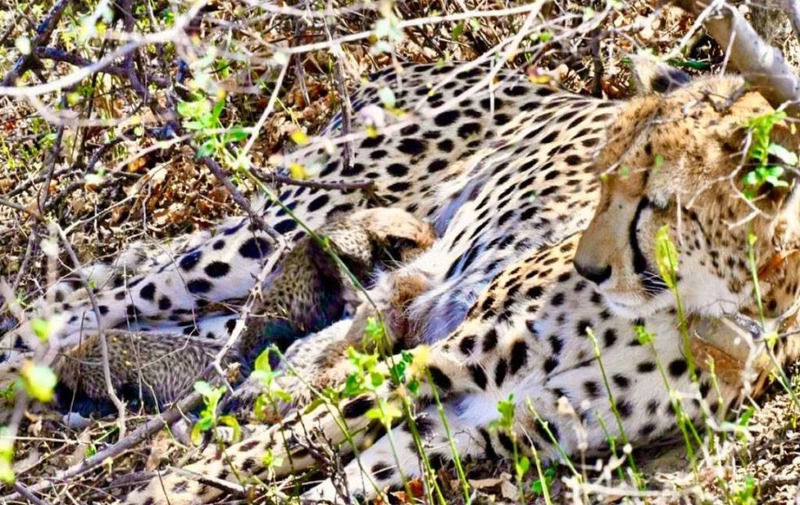
India's cheetah revival story has welcomed four adorable new additions! A female cheetah brought from Botswana has given birth to four cubs in the wild at Madhya Pradesh's Kuno National Park, taking the country's cheetah population to 62. The birth is particularly significant as it marks another step towards establishing a naturally breeding, free-ranging cheetah population in India.
The two-and-a-half-year-old female, identified as KOMG 3, delivered the four cubs after spending more than four months in the wild. All four cubs are reported to be healthy, bringing fresh hope to India's ambitious wildlife conservation programme.
This is only the second recorded instance of a cheetah giving birth in the wild since the reintroduction programme began in 2022. More importantly, it is the first such birth involving a female brought from Botswana.
According to Kuno National Park Director Uttam Kumar Sharma, the development represents an important step towards achieving Project Cheetah's primary objectives of survival and breeding under natural conditions. Unlike births inside enclosures, successful reproduction in the wild indicates that cheetahs are adapting to their new habitat and developing the ability to survive independently.
With the latest arrival, India's cheetah population has reached 62, including 43 cubs born in the country.
The milestone also marks a significant achievement for the Botswana cohort. Nine cheetahs, comprising six females and three males, were brought to Kuno in February 2026 to strengthen genetic diversity within the Indian population. KOMG 3's successful reproduction offers encouraging signs of their adaptation.
Several other births have added to the growing population in recent months. In October, India-born female KJP21 gave birth to five cubs after mating with a male from Botswana. September also saw another India-born female, KGP12, deliver four cubs.
Earlier this year, Namibian cheetahs Aasha and Jwala gave birth to five cubs each, while South African cheetah Gamini welcomed three cubs.
Cheetahs were declared extinct in India in 1952. Their return began on September 17, 2022, when eight cheetahs arrived from Namibia at Kuno National Park. A second batch of 12 came from South Africa in February 2023, followed by nine from Botswana in 2026.
While the programme has faced challenges, including cub mortality, injuries and the recent killing of a young male cheetah in Morena, the latest birth offers an encouraging development. Each successful birth in the wild brings India closer to its long-term conservation goal: establishing a self-sustaining cheetah population.
Four tiny cubs have arrived, but their significance goes far beyond their numbers. They represent another hopeful chapter in the return of one of the world's fastest land animals to the Indian wilderness.
.jpeg)
I have a Masters in Literature and a knack for spotting the silver lining! When I’m not chasing good news, you’ll find me nurturing my farm or lost in a good book.