"Dream, Dream, Dream! Conduct these dreams into thoughts, and then transform them into action."
- Dr. A. P. J. Abdul Kalam
"Dream, Dream, Dream! Conduct these dreams into thoughts, and then transform them into action."
- Dr. A. P. J. Abdul Kalam
27 Feb 2026
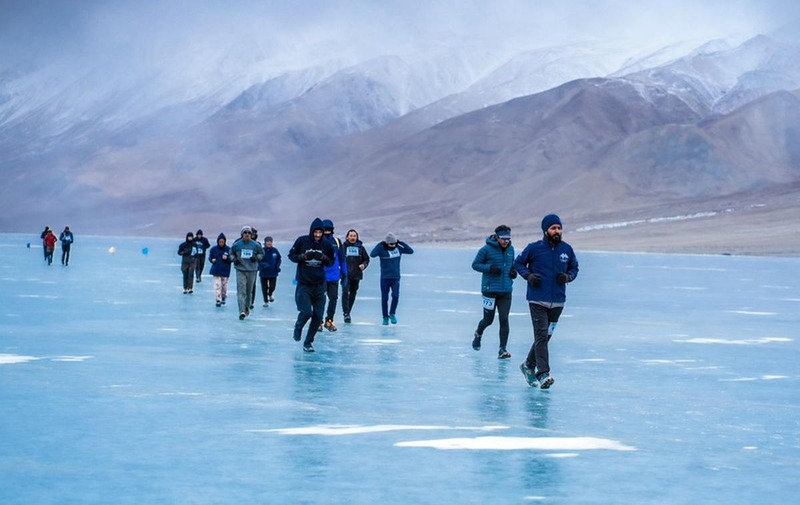
At an altitude where even breathing feels like a task, nearly 480 runners chose to race across a frozen lake. The Pangong Frozen Lake Marathon 2026, held in Ladakh, concluded on February 25, transforming the icy expanse of Pangong Lake into one of the most challenging marathon routes in the world. Set at 14,270 feet above sea level, the marathon tested not just physical stamina but mental strength. Participants ran over thick sheets of ice, battled sub-zero temperatures, and coped with low oxygen levels—conditions that push even seasoned athletes to their limits.
Organised by The Thin Ice Adventure in collaboration with the Government of the Union Territory of Ladakh and Indian Oil Corporation (Servo), the two-day event began on February 24 and concluded on February 25. The marathon was conducted across four categories. On Day 1, runners competed in the 42 km and 10 km races. A total of 46 runners took part in the full marathon, while 185 competed in the 10 km category. On Day 2, held on February 25, approximately 250 runners participated in the 21 km and 5 km categories, bringing the total participation to around 480 athletes across both days. This was the second edition of the event, popularly known as “The Last Run,” a title that carries a deeper environmental message.
Running at sea level is demanding. Running at 14,270 feet is a different story altogether. At such high altitudes, oxygen levels are significantly lower, increasing fatigue and the risk of altitude sickness. Add to that temperatures that can drop far below freezing, icy and slippery terrain, and strong mountain winds, and the challenge becomes extraordinary. Athletes had to train not just for distance but for survival in extreme conditions. Every step on the frozen surface required balance and caution. The ice beneath their feet was both solid and unpredictable. One wrong move could mean a fall. Yet, despite these challenges, the enthusiasm remained high. Runners from different parts of India and beyond embraced the experience, turning hardship into celebration.
The Pangong Frozen Lake Marathon is more than a sporting event. Organisers have consistently emphasized its environmental mission. Branded as “The Last Run,” the marathon aims to raise awareness about rapidly melting glaciers and the growing threat of climate change. Scientists warn that rising global temperatures are shrinking glaciers and reducing seasonal ice cover. If the warming trend continues, frozen-lake marathons like this may no longer be possible in the future. By hosting the race on the frozen surface of Pangong Lake, the event serves as both spectacle and statement. It reminds participants and spectators alike that the beauty of such extreme landscapes is fragile. The irony is striking: hundreds of runners racing across ice to highlight the possibility that one day, that ice may disappear.
Over the past decade, Ladakh has carved a niche as a hub for extreme adventure sports. From high-altitude cycling to ultra-marathons and winter treks, the region attracts athletes seeking challenges beyond the ordinary. The frozen marathon adds another dimension to this identity. Unlike traditional marathons run on city roads, this race is shaped by nature. The route depends on ice thickness and weather conditions. Safety assessments are crucial. Rescue teams and medical personnel remain on standby throughout the event. Such meticulous planning ensures that adventure does not compromise safety.
As of today, February 26, the echoes of footsteps on ice have faded, but the message remains. Nearly 480 runners braved thin air and extreme cold not only for medals but also for meaning. The Pangong Frozen Lake Marathon 2026 was a reminder that sport can amplify environmental conversations. It can turn landscapes into classrooms and athletes into ambassadors. And as runners pushed forward against wind and ice, they carried a shared hope that the glaciers they ran upon will endure long enough for future generations to witness their beauty. The marathon may be called “The Last Run,” but its spirit suggests something more powerful: that awareness, once awakened, continues long after the race is over.

Romanticizing life and shaping stories from everything I see through my journalistic lens. Also, I love sports on the side.