"Dream, Dream, Dream! Conduct these dreams into thoughts, and then transform them into action."
- Dr. A. P. J. Abdul Kalam
"Dream, Dream, Dream! Conduct these dreams into thoughts, and then transform them into action."
- Dr. A. P. J. Abdul Kalam
29 Apr 2026
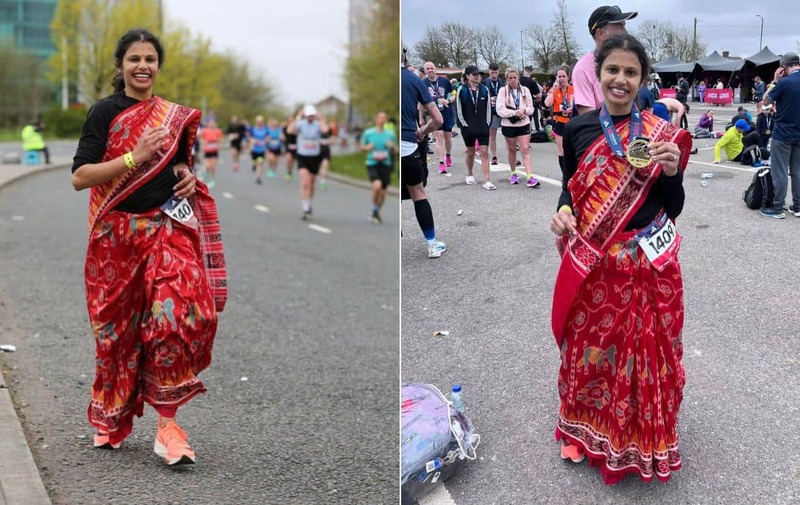
On a cool April morning in the vibrant city of Manchester, something extraordinary unfolded at the iconic Manchester Marathon. Among thousands of runners pushing their limits over 42.2 kilometres, one woman stood out not just for her speed but for what she represented. Madhusmita Jena, a 46-year-old Odia marathoner based in the UK, crossed the finish line wearing a traditional Sambalpuri saree, redefining what strength, identity, and determination look like in modern sports.
Completing a marathon is no small feat. It demands months of training, discipline, and mental toughness. But Madhusmita’s run was not just about finishing—it was about making a statement. Draped in a saree, a garment often associated with tradition rather than athleticism, she proved that cultural identity does not limit physical ability. Instead, it can empower it.
Madhusmita didn’t just participate; she made history. She completed the marathon in an astonishing 3 hours and 45 minutes, setting a new record for the fastest marathon run in a saree. In doing so, she broke the previous record held by Kranti Salvi, who had clocked 3 hours, 57 minutes, and 7 seconds at the Berlin Marathon in 2018. Shaving more than 12 minutes off an already impressive record is no easy task. It reflects not just physical endurance but also strategic pacing, mental resilience, and an unshakeable focus. For Madhusmita, this achievement was not about competition alone; it was about challenging perceptions and inspiring change.
Behind this incredible feat is a woman who has quietly built a legacy of perseverance. Madhusmita is not a professional athlete in the traditional sense. She is a SEND (Special Educational Needs and Disabilities) teacher, a mother of two, and someone who balances personal responsibilities with her passion for running. With 42 marathons already under her belt, her journey is a testament to consistency and dedication. But what truly sets her apart is her purpose. She took on this challenge to send a message that women, regardless of their background, culture, or attire, should feel free to pursue their passions without hesitation. Running in a saree was not a gimmick; it was a conscious choice to represent her roots and inspire others to embrace theirs.
As Madhusmita ran through the streets of Manchester, she wasn’t alone. She carried with her the hopes and pride of countless individuals who saw themselves in her. The vibrant Sambalpuri saree flowing with every stride became a symbol of confidence and resilience. Her story quickly resonated across communities, especially among South Asians living abroad. Messages poured in from places like Stockport and beyond, with many expressing how her achievement motivated them to start running or pursue their own goals. For some, it was the first time they saw someone like them represented in such a powerful way. Representation matters. It breaks barriers, challenges stereotypes, and opens doors for others.
Even before the race, Madhusmita’s story had begun to touch lives. She was featured on a BBC Radio Manchester series titled “26.2 Ways To Run A Marathon,” where she shared her journey and motivations. Listeners connected with her authenticity, and many reached out to say how inspired they felt. This connection highlights something important—stories have the power to move people. When someone sees a real person overcoming challenges and pursuing dreams, it makes those dreams feel more attainable.
Madhusmita Jena’s achievement is a reminder that inspiration can come from the most unexpected places. A teacher, a mother, and a runner, she embodies the idea that greatness is not limited to a single role. Her story encourages young girls and women everywhere to dream big, stay rooted, and never let societal expectations define their limits. Whether it is running a marathon, pursuing a career, or simply taking the first step towards a goal, her journey shows that anything is possible with determination.
Romanticizing life and shaping stories from everything I see through my journalistic lens. Also, I love sports on the side.