"Dream, Dream, Dream! Conduct these dreams into thoughts, and then transform them into action."
- Dr. A. P. J. Abdul Kalam
"Dream, Dream, Dream! Conduct these dreams into thoughts, and then transform them into action."
- Dr. A. P. J. Abdul Kalam
2 Jun 2026
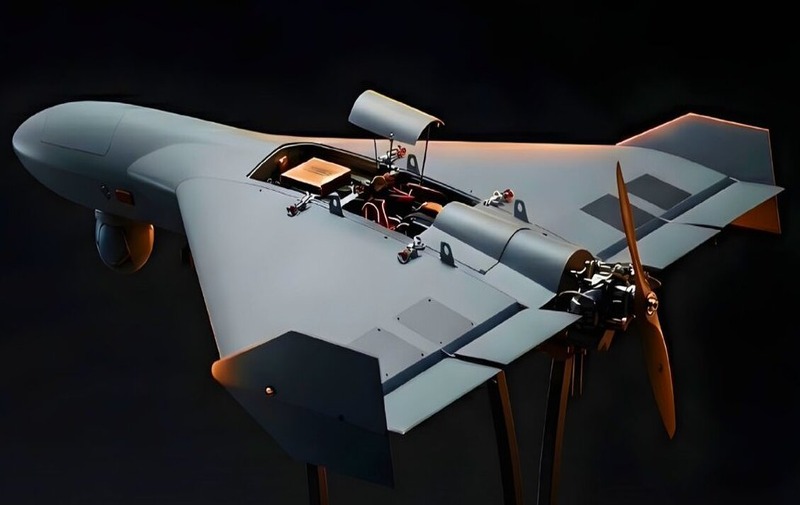
India’s defence sector has achieved another major milestone with the successful demonstration of the deadly Divyastra Mk-1, an indigenous tactical loitering munition capable of striking targets up to 500 kilometres away. Developed by Lucknow-based defence startup Hoverit, the advanced drone platform signals India’s growing dominance in homegrown military technology and battlefield innovation.
The live trials, conducted in the harsh desert terrain of Jodhpur under temperatures exceeding 50°C, showcased the drone’s precision strike capabilities, endurance, mobility, and rapid deployment features. Senior Indian Army officials witnessed the tests, marking a crucial step toward the drone’s potential induction into India’s armed forces.
The successful demonstration reinforces India’s ambition to reduce dependence on imported military systems while building a self-reliant defence ecosystem.
The Divyastra Mk-1 is not just another unmanned aerial vehicle. It is a tactical battlefield asset designed to carry out surveillance, reconnaissance, target tracking, and precision strike missions deep inside hostile territory.
Launched multiple times from a vehicle-mounted mobile launcher during the trials, the drone proved its ability to operate efficiently under battlefield conditions. The UAV can stay airborne for up to five hours and travel operational distances of nearly 500 km, giving armed forces a significant tactical advantage during long-duration missions.
According to a report in The Week, what makes the drone particularly lethal is its impressive attack speed of 300–400 kmph and its ability to carry payloads weighing up to 15 kilograms. Equipped with electro-optical and infrared sensors, the platform can identify, track, and strike enemy targets with precision. Its loitering capability allows it to hover over operational zones before engaging targets, making it a dangerous weapon in modern asymmetric warfare.
The drone can also function as a communication relay system in remote combat zones and even act as a decoy to confuse enemy air defence networks.
One of the biggest achievements behind the Divyastra Mk-1 project is its strong indigenous manufacturing base. Hoverit has announced that nearly 95% of the drone’s components are locally sourced, including critical systems such as propulsion units and optics.
This localisation significantly reduces costs, reportedly bringing procurement expenses down to almost one-third of comparable foreign systems. The development aligns perfectly with the government’s ‘Make in India’ and ‘Aatmanirbhar Bharat’ initiatives aimed at transforming India into a global defence manufacturing hub.
The rise of private defence innovators like Hoverit reflects a major shift in India’s defence landscape. Alongside indigenous systems such as the Tejas fighter jet and Akash missile system, the Divyastra Mk-1 adds another advanced weapon to India’s growing military arsenal.
The drone reportedly incorporates AI-driven navigation systems and swarm capabilities, positioning it among next-generation warfare technologies. Experts believe such systems could play a critical role in future conflicts where autonomous combat and real-time battlefield intelligence become decisive factors.
.jpeg)
I have a Masters in Literature and a knack for spotting the silver lining! When I’m not chasing good news, you’ll find me nurturing my farm or lost in a good book.