"Dream, Dream, Dream! Conduct these dreams into thoughts, and then transform them into action."
- Dr. A. P. J. Abdul Kalam
"Dream, Dream, Dream! Conduct these dreams into thoughts, and then transform them into action."
- Dr. A. P. J. Abdul Kalam
10 Aug 2026
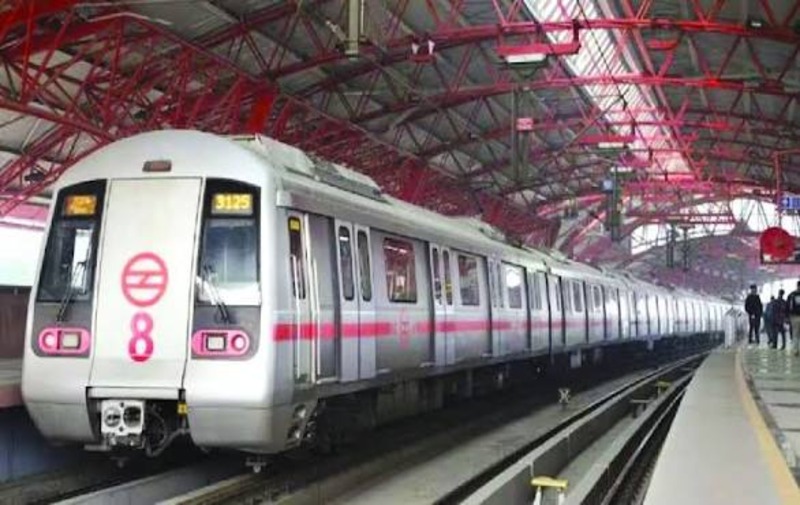
Delhi Metro has achieved an impressive 99.95% punctuality rate in 2026, setting a new benchmark for one of the world’s busiest urban rail networks.
The achievement is particularly notable because the network has expanded dramatically over the years. Today, the Delhi Metro Rail Corporation (DMRC) operates across 416.5 km, connecting 303 stations on 12 lines and featuring 31 interchange stations across Delhi and the National Capital Region.
For DMRC, a train is officially considered delayed only when it reaches its destination more than 59 seconds after its scheduled arrival. The Metro’s punctuality has steadily improved since its early years. It stood at 98.27% in 2003 and climbed to 99.64% by 2005. Despite the network becoming longer and more complex, its reliability has continued to improve.
Delhi Metro began operations on December 25, 2002, with a modest 8.4-km corridor connecting Shahdara and Tis Hazari through just six stations. More than two decades later, it has evolved into the backbone of public transport in the capital region.
Train frequency has also improved significantly. From a headway of around seven minutes during its early years, trains now arrive as frequently as every 2 minutes and 18 seconds on some of the busiest corridors. According to DMRC, the system's punctuality and reliability now compare favourably with several established metro networks around the world.
According to Anuj Dayal, Principal Executive Director, Corporate Communications, DMRC, Delhi Metro has outpaced major global networks such as Hong Kong, Paris and New York in train punctuality and reliability, cementing its place among the world’s leading urban rail systems.
Punctuality is only one part of the story. According to a report in The Indian Express, DMRC has achieved a Mean Distance Between Failures (MDBF) of 2.72 million car-kilometres, indicating the average distance trains travel before experiencing a service-affecting failure. International benchmarking through the Community of Metros (COMET), a consortium of 45 major metro systems, has also consistently placed Delhi Metro among the top five metro systems globally under the two-minute delay criterion.
Maintaining such reliability becomes increasingly challenging as networks expand, fleets grow and infrastructure ages. Yet Delhi Metro has managed to buck that trend.
The network's growing reliability has gone hand in hand with rising ridership. From around 82,000 passengers a day during its first year, Delhi Metro recorded more than 81 lakh passenger journeys on August 8, 2025. Its average daily ridership has now reached approximately 64.06 lakh passenger journeys.
From a six-station beginning to a sprawling, high-tech transport network, Delhi Metro's latest punctuality record shows how far India's urban rail system has come—and how efficiently it continues to move millions every day.
.jpeg)
I have a Masters in Literature and a knack for spotting the silver lining! When I’m not chasing good news, you’ll find me nurturing my farm or lost in a good book.