"Dream, Dream, Dream! Conduct these dreams into thoughts, and then transform them into action."
- Dr. A. P. J. Abdul Kalam
"Dream, Dream, Dream! Conduct these dreams into thoughts, and then transform them into action."
- Dr. A. P. J. Abdul Kalam
24 Mar 2026
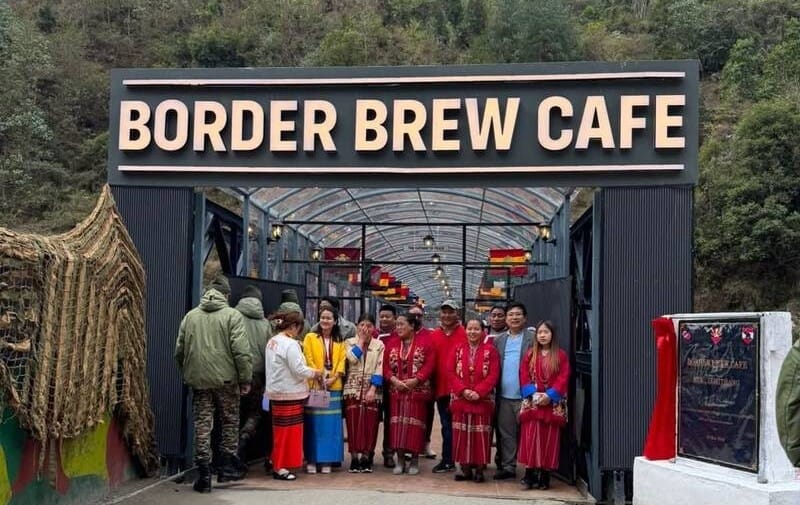
At nearly 10,000 feet in Arunachal Pradesh, near the quiet village of Zemithang in Tawang, an old Bailey bridge over the Ngyamjang Chu river stood unused after being decommissioned. Instead of scrapping it, the Indian Army redesigned the entire structure into the Border Brew Café, retaining the steel frame but converting it into a functional, visitor-friendly space. Located just a few kilometers from the India–China border, the café sits in an operationally sensitive zone where civilian infrastructure is rare. The project reflects a clear shift in approach: reuse of existing military assets for social and economic value without additional environmental strain.
Built for Experience, Not Just Utility
The café is designed to maximize its high-altitude setting, offering panoramic views of the Eastern Himalayas through an open, vistadome-style layout. Visitors can see the Ngyamjang Chu flowing beneath while surrounded by snow-clad peaks and dense valleys. The site also carries historical weight, it lies along the route taken by the Dalai Lama during his entry into India in 1959. By integrating accessibility with location value, the café turns a remote transit point into a destination. It caters to a growing segment of travelers seeking offbeat, high-altitude experiences beyond conventional tourist circuits.
Local Livelihoods at the Center
Operations at Border Brew Café are managed by women from the Monpa community, with logistical and training support provided by the Indian Army. This creates direct employment in a region where economic activity is limited due to terrain constraints. The model ensures local participation rather than external dependence, making the initiative sustainable. It also strengthens trust between civilians and the Army, as development becomes collaborative rather than top-down. For the local population, the café is not just a business, it is a stable source of income linked to increasing visitor flow.
A New Face of Border Development
Border Brew Café is already attracting bikers, trekkers, and tourists traveling through Arunachal Pradesh, especially along emerging routes in Tawang district. With improved road connectivity under ongoing infrastructure projects, Zemithang is gradually becoming accessible. The café functions as a strategic stopover, encouraging longer visits and boosting micro-level tourism. More importantly, it redefines the perception of border areas, from isolated defense zones to spaces of interaction, livelihood, and controlled tourism. By combining infrastructure reuse, community involvement, and tourism potential, the initiative presents a scalable model for similar regions across India.
Writing about what truly matters, good news and stories to remind the world - it is brighter than we think.