"Dream, Dream, Dream! Conduct these dreams into thoughts, and then transform them into action."
- Dr. A. P. J. Abdul Kalam
"Dream, Dream, Dream! Conduct these dreams into thoughts, and then transform them into action."
- Dr. A. P. J. Abdul Kalam
2 Apr 2026
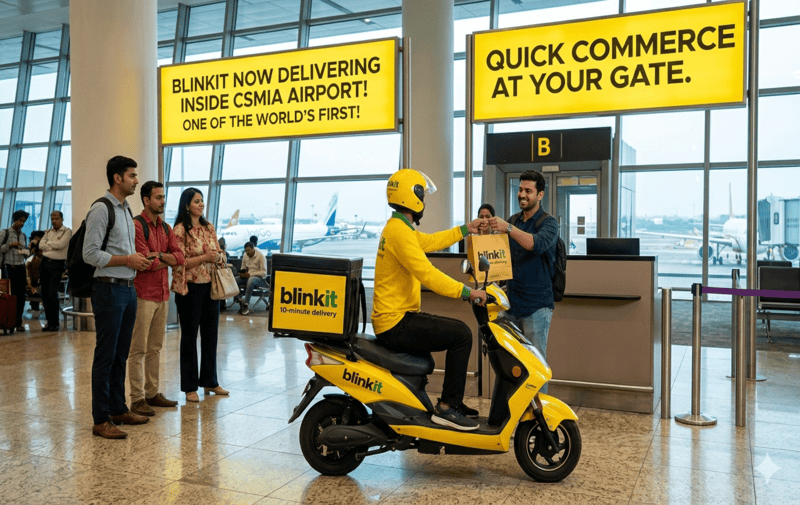
In a move that perfectly reflects India’s fast-changing consumer culture, Blinkit has launched its delivery service inside Chhatrapati Shivaji Maharaj International Airport. With this, the company becomes one of the first in the world to bring quick commerce directly into an airport environment—a place traditionally known for high prices and limited options. Currently available at Terminal 2 (T2), this service is being rolled out in phases, meaning not all passengers may have access just yet. However, even in its early stage, this innovation is already redefining how people experience travel in India.
The concept is simple but powerful. Travelers inside Terminal 2 can use the Blinkit app to order snacks, groceries, and daily essentials—just like they would from home. The delivery time remains impressively fast, sticking to the brand’s promise of 10–15 minutes. Imagine this: you’re waiting for your flight, craving your favorite chips or a specific drink, but don’t want to pay double the price at airport stores. Instead of settling or overspending, you just open your phone, place an order, and get it delivered right to you. This level of convenience brings the comfort of home shopping into one of the most stressful environments—air travel.
Airports around the world are known for expensive food and limited choices. For years, travelers have had to compromise: either pay high prices or go without their preferred items. Blinkit’s airport entry directly addresses this issue. By offering products at city-level prices, it allows passengers to save money without sacrificing convenience. For budget travelers, students, or families, this can make a real difference. A simple snack order that might cost ₹300 at a retail outlet could now be significantly cheaper through the app. More than just saving money, it gives travelers a sense of control, something often missing in the rigid, time-bound environment of airports.
While quick commerce has already transformed urban living in India, bringing it into an airport is a bold step forward. Airports are complex ecosystems with strict security, logistical challenges, and high operational standards. By successfully launching inside one of India’s busiest airports, Blinkit is setting a global benchmark. It signals that quick commerce is no longer limited to homes and offices—it can adapt to high-security, high-pressure environments too. This could inspire similar innovations worldwide, where convenience becomes a core part of the travel experience rather than an afterthought.
This move highlights a larger trend: delivery platforms are evolving beyond their original purpose. What started as a way to get groceries at home has now become an integrated lifestyle service. From residential areas to workplaces and now airports, quick commerce is embedding itself into everyday life. It reflects how consumer expectations are changing. People now want speed, affordability, and convenience everywhere they go. In the near future, we could see similar services in railway stations, bus terminals, and even tourist hotspots across India.
Blinkit’s presence inside Mumbai’s airport is more than just a new feature; it’s a glimpse into the future of travel. It shows how digital convenience is merging with physical experiences, creating a seamless journey for users. The boundaries between “home comfort” and “travel experience” are slowly disappearing. In a country like India, where innovation often scales rapidly, this could soon become the norm rather than the exception. Blinkit’s airport launch is a small idea with a big impact. By combining affordability, speed, and convenience, it transforms a common travel pain point into a smooth and enjoyable experience.

Writing about what truly matters, good news and stories to remind the world - it is brighter than we think.