"Dream, Dream, Dream! Conduct these dreams into thoughts, and then transform them into action."
- Dr. A. P. J. Abdul Kalam
"Dream, Dream, Dream! Conduct these dreams into thoughts, and then transform them into action."
- Dr. A. P. J. Abdul Kalam
3 Nov 2026
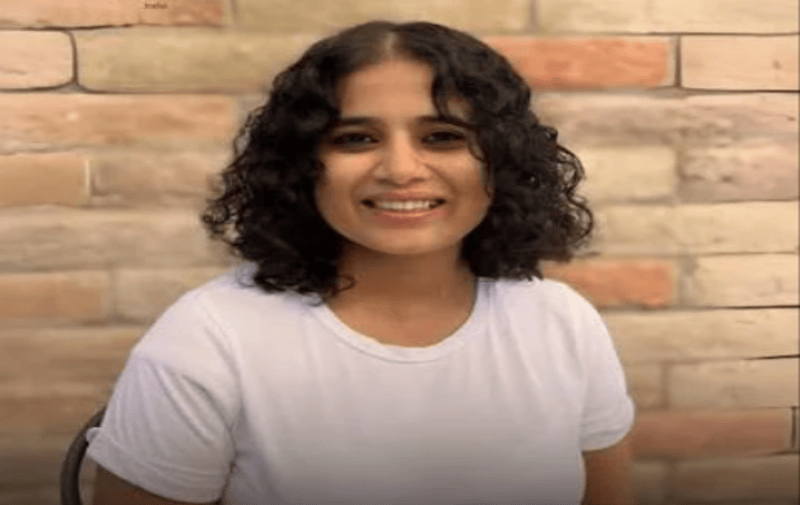
When the Space Shuttle Columbia broke apart on February 1, 2003, claiming the lives of all seven astronauts on board, the world was left in shock. For a young Ramya Manjunath Anche from Devanahalli, Bengaluru, the tragedy sparked questions about space, science and the mysteries beyond Earth.
More than two decades later, that curiosity has brought her to the forefront of an exciting space mission. Ramya, an astronomer and assistant research professor at the University of Arizona, is now the principal investigator of NASA's $20-million PUFFINS mission.
Short for Polarimetry in the Ultraviolet to Find Features in Interstellar Dust, the mission will use a compact telescope, roughly the size of a dinner plate, to study tiny dust particles drifting between stars. Scheduled for launch in 2030, it is expected to open a new window into a largely unexplored part of our universe.
Science was a familiar subject in Ramya's home. Her father, A Manjunath, is a microbiologist who retired from the University of Agricultural Sciences, Bengaluru. His work on soil research often became a topic of discussion at home, encouraging his daughter to ask questions and seek answers.
Ramya studied at Oxford English School in Devanahalli and MES Vidyasagar Prof. MPL Sastry PU College in Bengaluru. She later earned a degree in Electrical and Electronics Engineering from Sir M Visvesvaraya Institute of Technology.
At a time when many engineering graduates were drawn towards lucrative software jobs, Ramya chose a different path. Her interest lay in research, and her family supported her decision.
In 2012, she joined the Indian Institute of Astrophysics for an integrated MTech-PhD programme in astronomical instrumentation under the guidance of Professor G C Anupama. She later pursued postdoctoral research at the Inter-University Centre for Astronomy and Astrophysics (IUCAA), Pune.
In 2021, she moved to the University of Arizona, where she continued her work in astronomy.
PUFFINS will investigate some of the smallest particles in space, roughly the size of a common cold virus. Though invisible to most telescopes, these interstellar dust grains play an important role in how starlight travels through galaxies and how stars and planets form.
The mission will use ultraviolet spectropolarimetry, a specialised technique that has not been attempted from space in three decades. Its observations could help scientists better understand the nature of interstellar dust and the processes that shaped the universe.
Ramya secured NASA's $20-million support for the mission under its Astrophysics Pioneers programme. She will lead a team of around 40 scientists, engineers, graduate students and researchers. Over the next four years, they will design and build the telescope before its planned 2030 launch.
Ramya's journey has not been without challenges. According to The Indian Express, she recalls facing stereotypes that made her question whether she was suited for physics, mathematics-heavy subjects and engineering projects. Yet, she continued to pursue research with dedication and perseverance.
For Ramya, PUFFINS will also mark a personal milestone: it will be the first instrument she has helped design that will actually be built and launched into space.
A question sparked by a space tragedy has now become a mission to explore the mysteries between the stars. And a young girl from Devanahalli is leading the way.
.jpeg)
I have a Masters in Literature and a knack for spotting the silver lining! When I’m not chasing good news, you’ll find me nurturing my farm or lost in a good book.