"Dream, Dream, Dream! Conduct these dreams into thoughts, and then transform them into action."
- Dr. A. P. J. Abdul Kalam
"Dream, Dream, Dream! Conduct these dreams into thoughts, and then transform them into action."
- Dr. A. P. J. Abdul Kalam
3 Sep 2026
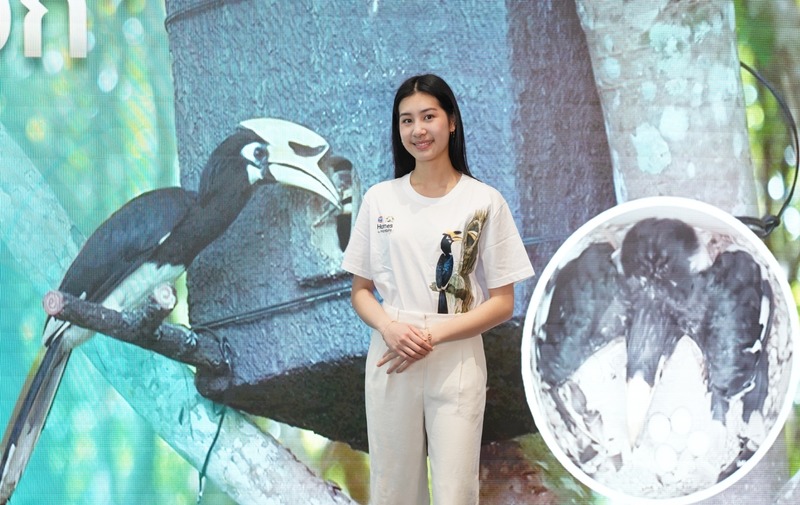
For Yanin ‘Proud’ Tangkaravakoon, the journey began with a school trip. When she was in fourth grade, Proud visited Khao Yai National Park in Thailand and became fascinated by hornbills—the striking birds known for their distinctive bills and important role in forest ecosystems. Her fascination soon turned into concern when she learned that 51 of the 62 hornbill species globally were experiencing population declines, driven by threats including deforestation, habitat loss and poaching.
At just 17, she decided she wanted to do something about it. That idea became “Homes for Hornbills.”
Hornbills do not build nests. They depend on naturally formed cavities in large trees to breed, but as forests disappear, suitable nesting spaces are becoming increasingly difficult to find. To find a solution to the dwindling population, Proud, worked with the Thailand Hornbill Research Foundation (THRF) and began developing artificial nests that could provide safe and durable alternatives.
At the same time, she wanted the nests to be environment friendly. Her project explored the use of discarded plastic bottles transformed into resin-based materials, combined with natural fibres. Researchers and partners helped refine the nests for durability, ventilation, size and bird safety. The resulting nests are designed to remain functional for up to 10 years, offering hornbills a more durable breeding option.
The idea has now moved from the drawing board into the forest. So far, 20 artificial nests have been installed in southern Thailand. During the 2025 breeding season, 10 nests were occupied and 14 hornbill chicks successfully fledged. By 2026, 14 nests were occupied, according to the project.
But Proud's vision extends beyond the nests themselves. It was important for the local community also to understand the significance of these beautiful birds so that they take efforts to conserve them. Her initiative brought conservation education into schools and that encouraged young people to understand the importance of protecting wildlife and forests.
The project also hopes to create alternative livelihood opportunities for local communities, including nest construction and monitoring, helping reduce economic pressures that can contribute to poaching and deforestation.
Proud's work has now attracted international attention. “Homes for Hornbills” earned recognition from The Earth Prize and National Geographic’s Slingshot Challenge. With $12,500 in prize funding from The Earth Prize, Proud plans to expand the project into key hornbill habitats and work more closely with communities.
She has also created an award-winning documentary, Homes for Hornbills, and presented her research to the Faculty of Forestry at Kasetsart University.
What started with a young girl's fascination with a remarkable bird has become a growing conservation movement. And perhaps its most powerful message is simple: one young person's idea can give waste a purpose and wildlife a home.
.jpeg)
I have a Masters in Literature and a knack for spotting the silver lining! When I’m not chasing good news, you’ll find me nurturing my farm or lost in a good book.