"Dream, Dream, Dream! Conduct these dreams into thoughts, and then transform them into action."
- Dr. A. P. J. Abdul Kalam
"Dream, Dream, Dream! Conduct these dreams into thoughts, and then transform them into action."
- Dr. A. P. J. Abdul Kalam
20 Feb 2026
Imagine gliding past Mumbai’s skyline on a quiet, battery-powered ferry while the city’s roads remain choked with traffic. For a city where daily commutes often stretch for hours, the proposed Mumbai Water Metro could mark the beginning of a transport revolution. Designed to reduce road congestion and offer a faster, eco-friendly alternative, the project aims to shift a section of daily commuters from overcrowded streets to the city’s vast waterways. Mumbai, the financial capital of India, has long struggled with traffic gridlocks. Rapid urbanisation, growing vehicle ownership, and expanding suburbs have placed immense pressure on existing transport systems. For office workers, students, and business owners across the Mumbai Metropolitan Region (MMR), travel time has become a major challenge affecting both productivity and quality of life.
The Water Metro project is expected to roll out in phases beginning this December. According to Maharashtra Ports Minister Nitesh Rane, the Detailed Project Report (DPR) is likely to be submitted by February 28. Discussions have already taken place with Maharashtra Chief Minister Devendra Fadnavis regarding the feasibility of routes. A formal announcement is anticipated during the state budget presentation on March 6. Initially, two finalised routes will be taken up for implementation, starting with Mumbai city before gradually expanding to adjoining districts within the MMR.
The Maharashtra government has outlined six to eight routes across the Mumbai Metropolitan Region. High-traffic coastal locations such as Nariman Point, Worli, Bandra, Juhu, and Versova are expected to be connected through electric ferries. One of the most exciting proposals involves the Radio Club jetty near the Gateway of India in South Mumbai. Once operational, the Water Metro could ferry passengers to Navi Mumbai International Airport in approximately 40 minutes. Considering current road travel times, this could significantly reduce commute stress for frequent flyers and daily travellers. For many residents living along the coast, this means more than convenience. It could mean reclaiming precious hours lost in traffic and spending that time with family, work, or personal growth.
The Water Metro project is estimated to cost around Rs 1,200 crore. The initial focus will remain on Mumbai city, ensuring smooth implementation before expanding services to the wider metropolitan region. The Kochi Metro Rail Limited has been awarded the contract to prepare the Detailed Project Report for Mumbai’s proposed Water Metro. The model draws inspiration from the successful water metro system implemented in Kerala.
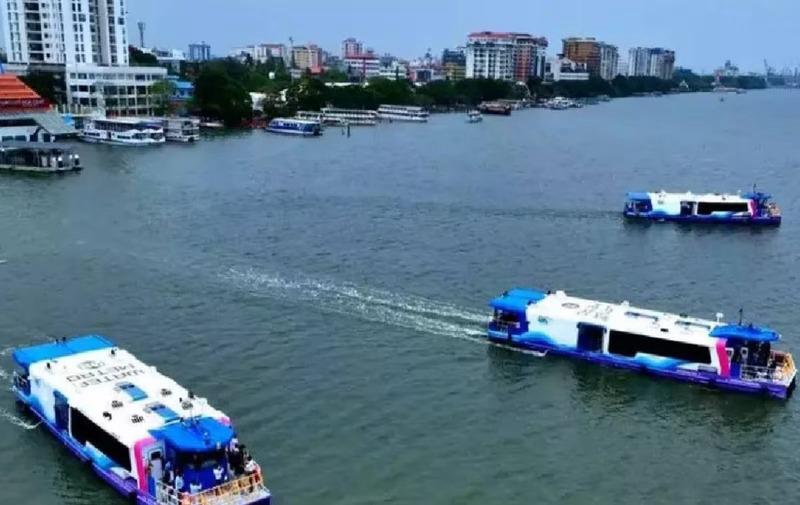
The Kochi Water Metro efficiently connects island communities to the mainland using electric ferries operating through backwaters and waterways. The vessels used in Kochi are battery-powered or hybrid boats built by Cochin Shipyard Ltd. These boats typically carry 50 to 100 passengers and operate across a planned network of 16 routes, 38 terminals, and around 75 kilometres of waterways, with Phase One covering 41 kilometres. The Kochi model has proven that water-based urban transport can be clean, quiet, and efficient. It significantly reduces carbon emissions, fuel consumption, and noise pollution. Mumbai hopes to replicate and possibly scale this success.
The introduction of battery-powered ferries could significantly lower vehicular pollution across Mumbai’s congested corridors. With fewer cars and buses on the road, fuel consumption and carbon emissions may reduce over time. Beyond environmental benefits, the Water Metro could stimulate economic growth. Faster connectivity between business hubs like Nariman Point and Bandra may enhance commercial productivity. Improved access to coastal areas could also boost tourism and local businesses. For daily wage earners and office-goers, the impact could be deeply personal. Saving even 30 to 60 minutes per day translates into hundreds of hours annually. That time could mean attending a child’s school event, pursuing higher education, or simply resting after a long workday.
Mumbai has always adapted to change. From local trains to metro rail, each transport evolution has reshaped how the city functions. The Water Metro represents another bold step toward sustainable urban mobility. If executed efficiently, this project could reduce congestion, cut commute times, lower pollution levels, and redefine coastal connectivity. With the first phase expected to begin in December, Mumbai may soon witness boats becoming as common a sight as buses and trains. For millions who call this city home, the Water Metro is not just a transport project. It is hope floating on water, a promise of faster journeys, cleaner air, and a better quality of life.
Romanticizing life and shaping stories from everything I see through my journalistic lens. Also, I love sports on the side.