"Dream, Dream, Dream! Conduct these dreams into thoughts, and then transform them into action."
- Dr. A. P. J. Abdul Kalam
"Dream, Dream, Dream! Conduct these dreams into thoughts, and then transform them into action."
- Dr. A. P. J. Abdul Kalam
6 Mar 2026
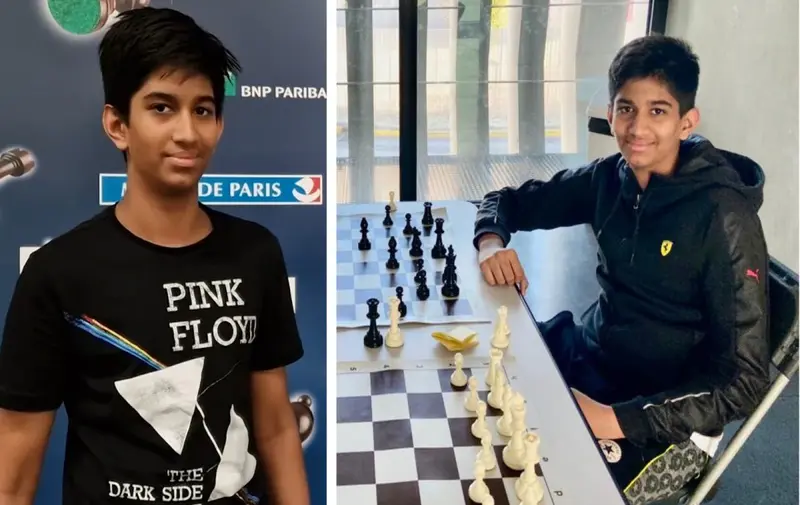
For many people, chess is simply a game a mental challenge or a way to pass time. But for 16-year-old Aarav Dengla from Mumbai, chess has always been something deeper. To him, the 64-square board represents a lifelong companion. “It’s like a friend for life. If you have a board with you, you don’t really need anybody else,” says his mother, Shipra Dengla, describing the bond her son shares with the game.
In February 2026, Aarav achieved one of the highest honours in chess by becoming India’s 93rd Grandmaster. With this milestone, he also became only the third Grandmaster from Mumbai, marking an important moment not just for the young player but also for the city’s growing chess legacy. Behind this achievement lies a remarkable journey of family support, discipline, and a passion that began in childhood.
Aarav’s story began in Mumbai’s Pali Hill neighbourhood in Bandra, where chess was more than just a pastime. It was part of the family culture. His grandfather, Bhavani Sharan Saxena, and maternal uncle, Ashish Saxena, were both accomplished chess players. Their love for the game naturally influenced Aarav from a young age. Growing up in such an environment meant that the chessboard was always close by, and curiosity soon turned into serious interest.
Even at a very young age, Aarav showed signs of extraordinary talent. When he began playing rated tournaments at the age of six, his progress was astonishing. Within just four months, he gained nearly 800 rating points, jumping from around 1000 to almost 1800—a rise that surprised even experienced observers of the game. It was around this time that Aarav won a national championship and qualified for the World Championship in Brazil, signalling that the young player had the potential to compete at the highest level.
However, the road to Brazil also revealed the challenges that come with nurturing a young sporting talent. When Aarav qualified for the World Championship, neither of his parents could accompany him due to their work commitments. At the time, Shipra Dengla was working in marketing with the Mahindra Group, while Aarav’s father also had professional responsibilities. For a young child, travelling alone to such a major international event was not possible. Faced with this situation, Shipra made a life-changing decision. She resigned from her job so that she could fully support Aarav’s chess career. “I knew this problem would keep coming up again and again,” she explains. From that moment onward, Shipra became more than just a parent. She became Aarav’s travel companion, tournament planner, and emotional support system. Managing travel schedules, arranging training sessions, and ensuring he balanced studies with competition became part of her everyday life. Despite this enormous sacrifice, she remains humble about her role. She insists that the Grandmaster title belongs entirely to Aarav.
Another important influence in Aarav’s journey was his first formal coach, Grandmaster Pravin Thipsay, one of India’s most respected chess minds. Remarkably, Thipsay lived just a block away from Aarav’s home. This allowed the young player to receive professional guidance from an early age. But Thipsay’s lessons went beyond chess strategies and opening moves. He emphasised the importance of education and intellectual development. According to Shipra, Thipsay often encouraged Aarav to write regularly, believing that strong academic habits help sharpen thinking—an essential quality for a chess player. This balanced approach played a crucial role in shaping Aarav’s development both as a student and as a competitor.
While chess quickly became Aarav’s passion, academics remained equally important in his life. He studied at the IB curriculum-based Dhirubhai Ambani International School in Mumbai, where maintaining a minimum attendance of 90 percent required strict discipline. During his early years, Aarav mostly limited his competitive tournaments to school vacations. Despite the demands of international competition, he successfully completed the Primary Years Programme (PYP) and the Middle Years Programme (MYP). Later, in the ninth grade, Aarav moved to Phillips Academy Andover in the United States, one of the world’s most prestigious educational institutions. Balancing rigorous academics with professional-level chess is never easy, but Aarav’s journey demonstrates how discipline and planning can make it possible.
Becoming a Grandmaster is one of the most difficult achievements in chess. Players must earn multiple Grandmaster norms in high-level tournaments while also crossing the 2500 Elo rating mark. Aarav steadily worked toward these requirements through international competitions. His first Grandmaster norm came in 2022 at the Medjunarodni Velemajstorski Turnier tournament, where he delivered an outstanding performance. Scoring 7 out of 9 points with a performance rating of 2603, he remained undefeated and defeated experienced grandmasters such as Milan Vukic, Borko Lajthajm, and Zvonko Stanojoski. The decisive moment finally arrived in February 2026 at the GM and IM Round Robin Festival in Saha Bijeljina. Aarav finished first with 7 out of 9 points, securing his final norm and crossing the 2500 rating mark. With that achievement, he officially became India’s 93rd Grandmaster.
Aarav Dengla’s success reflects a broader transformation taking place in Indian chess. Once dominated by the legendary Viswanathan Anand, India’s chess scene is now witnessing an explosion of young talent. Players like D. Gukesh and Arjun Erigaisi have inspired a new generation of prodigies who believe they can compete with the world’s best. Aarav himself has spoken about being motivated by these modern Indian chess stars, whose rapid rise has changed how young players view their possibilities. His journey is another sign that India’s chess revolution is only getting stronger. Yet beyond trophies and ratings, his journey carries a deeper message. It is a story of passion, discipline, and a mother’s quiet sacrifice that helped build a champion. And in that sense, every move Aarav makes on the chessboard carries a part of that journey—a reminder that behind every great player is a story of dedication, belief, and unwavering support.
Romanticizing life and shaping stories from everything I see through my journalistic lens. Also, I love sports on the side.