"Dream, Dream, Dream! Conduct these dreams into thoughts, and then transform them into action."
- Dr. A. P. J. Abdul Kalam
"Dream, Dream, Dream! Conduct these dreams into thoughts, and then transform them into action."
- Dr. A. P. J. Abdul Kalam
23 Feb 2026
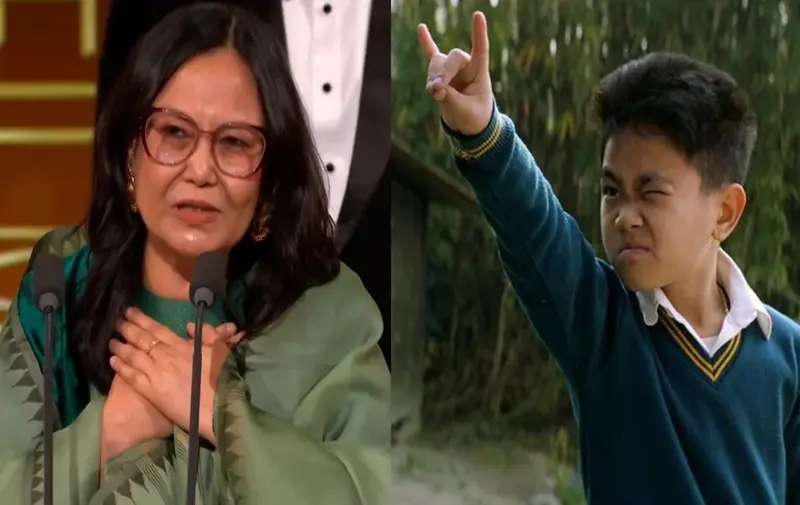
Whenever Indian films shine on the international stage, it is a moment of pride for every Indian. It is not just a trophy on foreign soil; it is validation of stories rooted in our culture, our struggles and our humanity. This year, one such film carried the hopes of a region and the pride of a nation all the way to London. The Manipuri-language film Boong created history by winning the BAFTA Award for Best Children’s & Family Film, reminding the world that powerful storytelling knows no borders. At the 79th British Academy Film Awards held at London’s Royal Festival Hall, Boong stood tall among global contenders. Competing against internationally celebrated titles like Lilo & Stitch, Arco, and Zootropolis 2, the film emerged victorious, an extraordinary achievement for a debut feature from India’s Northeast.
The BAFTA Awards, presented by the British Academy of Film and Television Arts, are regarded as the highest honour in British cinema and are often considered equivalent to the Academy Awards. Founded in 1947, BAFTA has long celebrated excellence in global cinema, recognising films that shape culture and move audiences. For Boong to win in the Best Children’s & Family Film category is not just a win for its makers but for Indian regional cinema as a whole. It was the sole Indian nominee at this year’s BAFTAs, making its victory even more significant. As the announcement echoed across the Royal Festival Hall, it signalled a shift: regional Indian stories are no longer confined to festival circuits; they are claiming their rightful space on the world stage.

Directed by debutant Lakshmipriya Devi and backed by producer Farhan Akhtar along with Ritesh Sidhwani, Vikesh Bhutani, Alan McAlex and Shujaat Saudagar, Boong tells the story of a young boy from Manipur who simply wants to surprise his mother with a gift. In his innocence, he believes bringing his father back home would be the most special present of all. But his journey unfolds against the complex backdrop of racial tensions and border challenges in Manipur. As he searches for his father, he discovers something far greater: a new beginning shaped by resilience and quiet strength.
The film’s cast, including Gugun Kipgen and Bala Hijam Ningthoujam, delivers deeply moving performances that humanise conflict through the eyes of a child. The narrative does not sensationalise turmoil; instead, it gently reveals how children often bear the emotional weight of adult divisions. That emotional honesty resonated deeply with international audiences.

Before its BAFTA triumph, Boong had already begun an impressive global journey. The film premiered at the 2024 Toronto International Film Festival in the Discovery section, a prestigious platform for emerging filmmakers. It was later screened at the Warsaw International Film Festival 2024, the MAMI Mumbai Film Festival 2024, the 55th International Film Festival of India, and the Indian Film Festival of Melbourne 2025. Each screening amplified its message and widened its audience. Yet the BAFTA win marks a turning point—transforming festival acclaim into global recognition.
For decades, stories from India’s Northeast have remained underrepresented in mainstream Indian cinema. A BAFTA win for a Manipuri-language debut feature disrupts that pattern. It sends a message that regional narratives are not niche; they are universal. The triumph also underscores the growing global appetite for authentic storytelling. In an era dominated by spectacle, Boong proves that intimate, human stories still hold immense power. For Indian audiences, this victory is layered with emotion. It affirms that our diverse voices from metropolitan cities to remote valleys, deserve international platforms. It reassures young filmmakers from smaller regions that their language, culture and lived realities matter.
India shone bright at this year’s BAFTAs, and Boong carried that light. As the iconic BAFTA mask was handed over on stage, it symbolised more than artistic achievement. It represented hope, representation and resilience. Whenever Indian films do well internationally, it unites us in celebration. But when a film like Boong, rooted in regional identity yet global in emotion, wins, it feels even more special.
Romanticizing life and shaping stories from everything I see through my journalistic lens. Also, I love sports on the side.